

Balancing of emissions at
the BER location
The CO2 emissions of a company can be balanced with the help of its carbon footprint. The footprint includes both the company’s own CO2 emissions and those of its value chain. It is categorised in scopes. From the airport company’s perspective, the scopes include the following:
Scope 1: CO2 emissions caused by the operation of company-owned facilities. For example, these are our own vehicle fleet, our terminal infrastructure and combined heat and power plants with their natural gas consumption.
Scope 2: Indirect emissions caused by the purchase of own-utilised energy in the form of electricity, heating and cooling.
Scope 3: All indirect emissions from the upstream and downstream supply chain. This also includes flight operations.
The airport company is responsible for Scope 1 and Scope 2 emissions. Scope 3 emissions are the emissions of its partners from the upstream and downstream value chain. At the BER location, Scope 3 includes the landside connection, for example in the form of passenger arrivals and departures as well as emissions caused by flight operations. These are caused, inter alia, by ground handling service providers, kerosene delivery and flight movements in accordance with the LTO cycle (Landing and Take Off Cycle). We can only influence these emissions indirectly.
Corporate Carbon Footprint
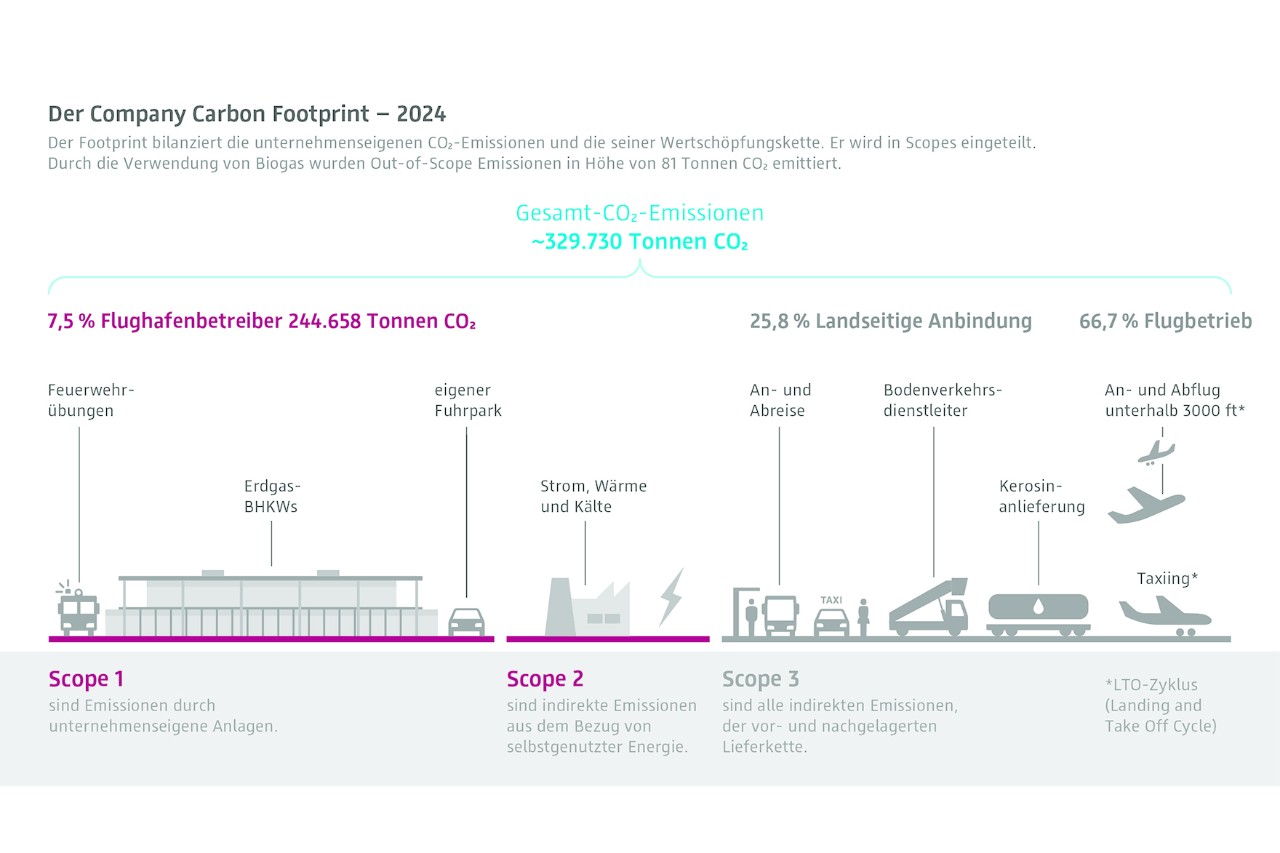
In 2023, all emissions accounted for at the BER location were about 350,000 tonnes of CO2. The emissions within Scope 1 and Scope 2 are 20,552 tonnes of CO2. Of these, about 95 per cent of emissions result from supplying heating and cooling to infrastructure.
The indirect Scope 3 emissions from FBB’s perspective account for about 94 per cent of the total CO2 emissions at the location. These emissions are attributable to airport activities.
Beyond our responsibility
There are many partners at the location that contribute to ensuring airport operations. Therefore, we see the airport as an overall system and are also committed to reducing emissions beyond our direct responsibility. We train and qualify all employees so that everyone can make a contribution to protecting the climate and the environment in the workplace. We involve airlines, service providers and other business partners in climate protection and sustainability. We develop measures with the respective partners to reduce their emissions (Scope 3) and provide infrastructure for this purpose. All in the spirit of promoting and demanding.
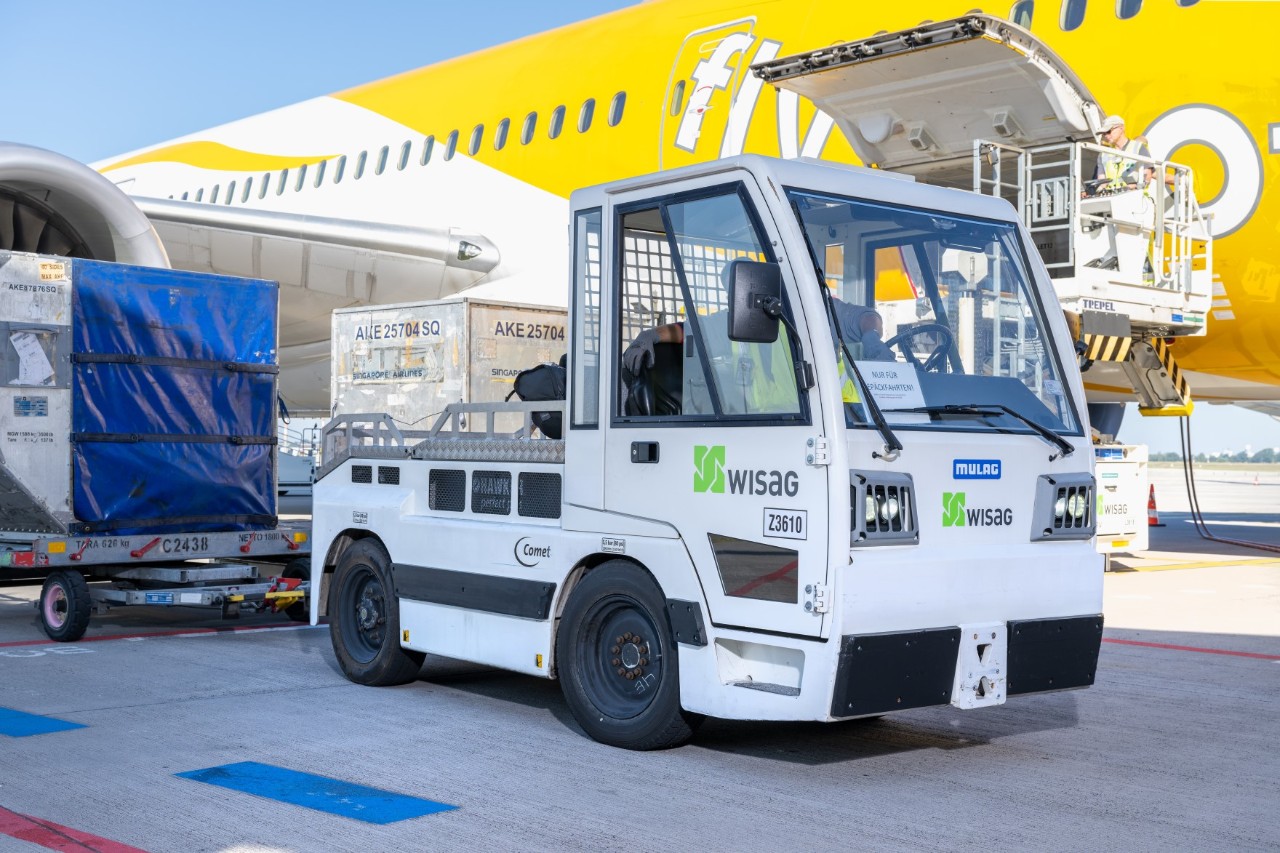
This includes the expansion of e-mobility on the apron. Use of electric vehicles and equipment for aircraft handling at BER has already increased steadily in recent years. Since 2022, we have been demanding that the ground handling service providers operating at BER comply with equipment-specific e-quotas. This requirement is aimed at reducing the use of fossil fuels and the resultant savings in CO2 emissions by way of operating vehicles and equipment. The share of electric passenger buses is to increase to 20 per cent by summer 2026 and the share of electric baggage trolleys to 65 per cent. This will not only reduce emissions from aircraft handling, but also make it cleaner, safer and quieter. In addition to protecting the climate, these effects will also help improve occupational safety.
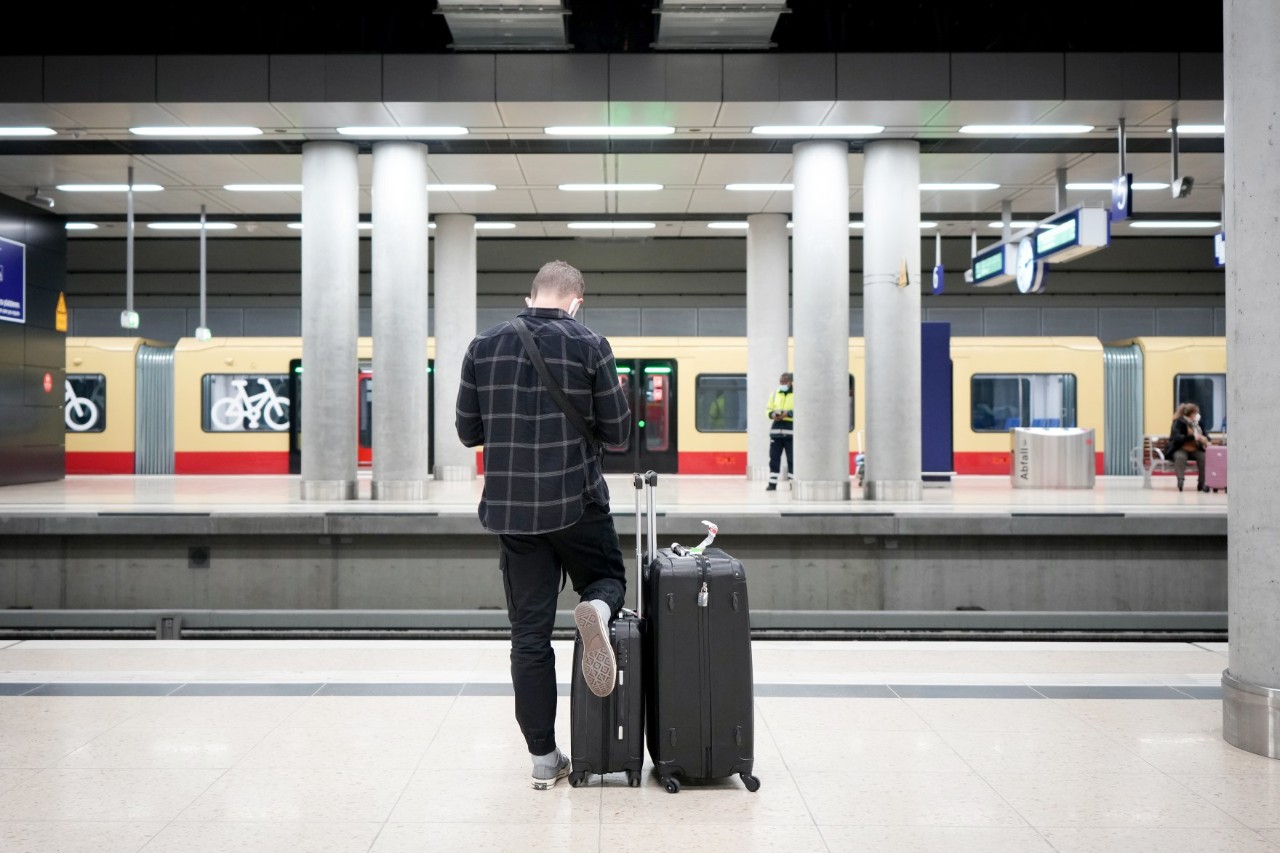
Our passengers can also influence the emissions within our value chain by way of their arrival and departure behaviour to and from BER. The six-track BER railway station is located directly below Terminal 1 and is served by long-distance and regional trains as well as the S-Bahn. Furthermore, two public transport providers connect BER to Berlin and Brandenburg by bus. This good range of alternative forms of mobility means that more than half of the passengers arriving at and departing from BER have been using public transport to and from the airport for years. Compared to other airports, this share can be categorised as very high.
How to reach us:
-
 Airport information (24/7)
 -
 Find the right contact


