The viewer looks up from a worm's eye view past the treetops to the sky, where an aeroplane can be seen.

Energy

Increase energy efficiency and promote renewable energies

Two energy centres currently guarantee BER’s energy supply. Four natural gas-fuelled combined heat and power units (CHP units) generate heat and electricity. Electricity-operated refrigeration compression machines guarantee the cooling supply. Peak load boilers are also used. Some 25 per cent of the airport’s annual electricity requirements in 2023 were covered via the combined heat and power plants. The remaining 75 per cent is covered by electricity from renewable energy sources. Proof is furnished by way of certificates of origin from the German Federal Environment Agency.

In total, the airport consumed about 100 GWh of electricity in 2023. This is roughly equivalent to the electricity consumption of a medium-sized city with 100,000 inhabitants.

Flughafen Energie & Wasser GmbH (FEW), a wholly-owned subsidiary of Flughafen Berlin Brandenburg GmbH, specialises in ensuring the reliable operation of the supply and disposal systems at BER.

Further information is available at: few.berlin-airport.de
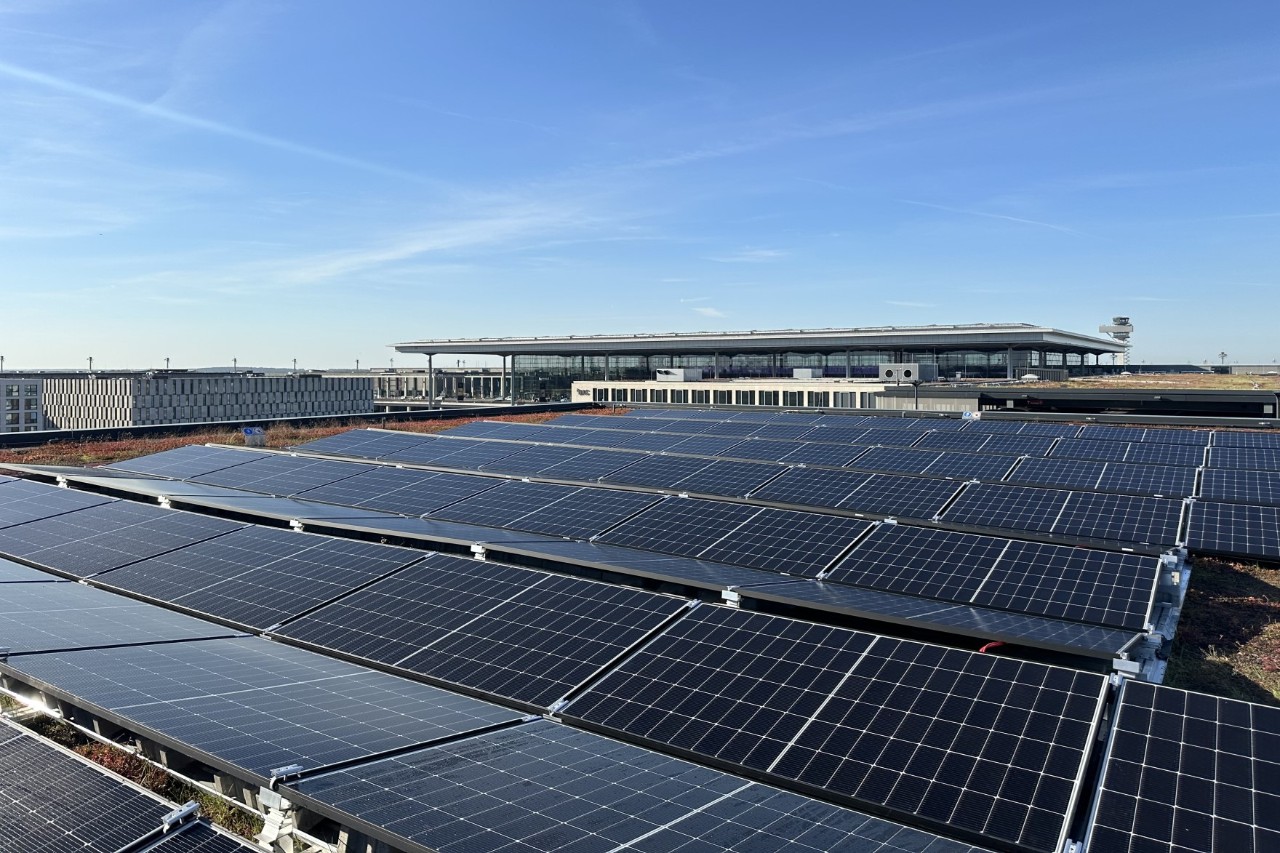
Photovoltaic panels on a roof. BER Terminal 1 can be seen in the background.

Expansion of renewable energies

BER is increasingly relying on solar energy: The first three photovoltaic systems will be installed on the roofs of car parks P3, P7 and P8 in front of Terminal 1 by spring 2025.

  • Installation of about 5,000 solar modules
  • Total area of 22,000 m² (comparable to three football pitches)
  • Forecast annual electricity yield: 2.2 GWh
  • Equivalent to supplying about 600 three-person households with electricity

The next step entails utilising further roof and open spaces for photovoltaics by 2030. This is part of the overall strategy to make airport operations CO₂-neutral by 2045.

Successfully implemented energy efficiency measures

At more than 75 implemented energy efficiency measures, BER demonstrates its ongoing commitment to sustainability and climate protection. By way of use of state-of-the-art technology, optimised operational management and environmentally conscious user behaviour, we are constantly working to further reduce our consumption of energy and resources and to continually increase the share of renewable energies.
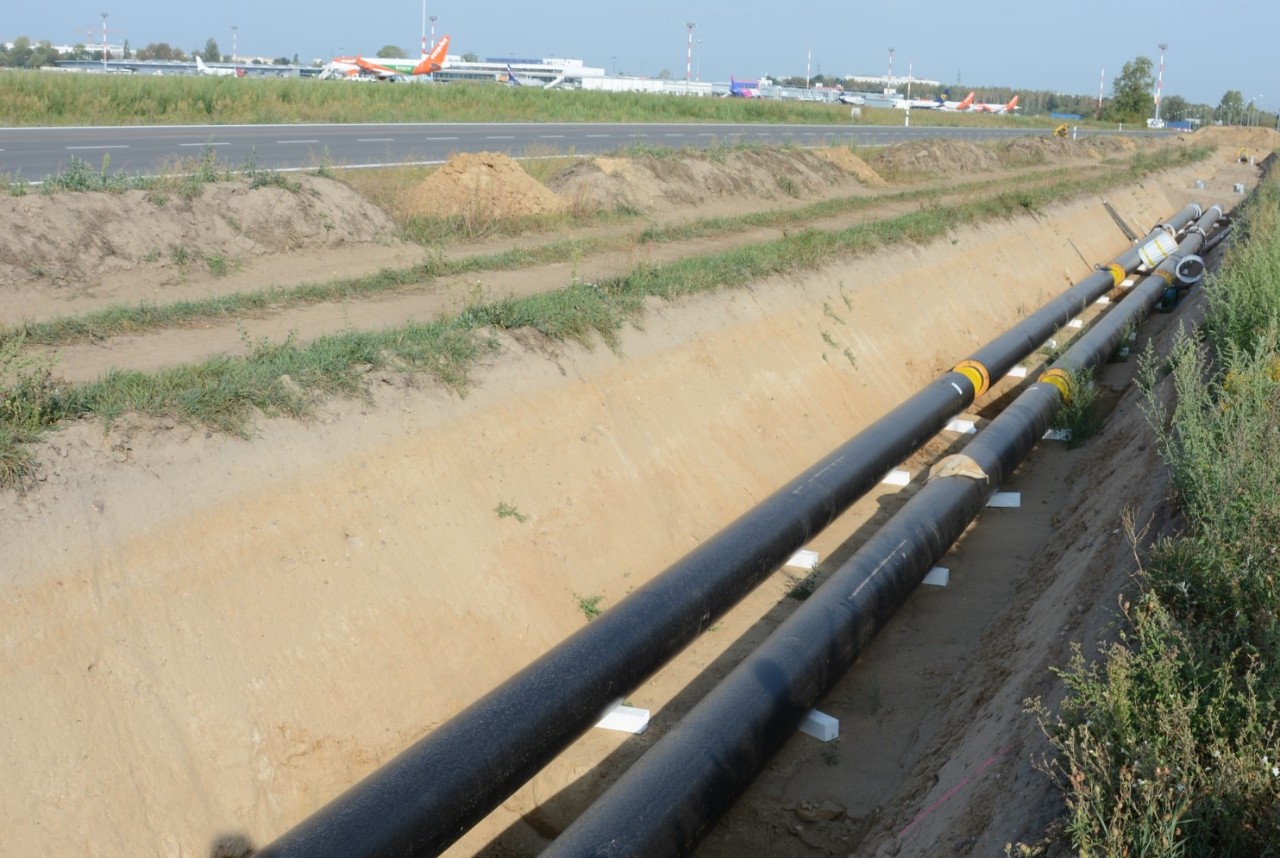
Construction site for a long-distance heating line on the airport site

Optimising the heat supply

One key measure was the refurbishment of the district heating line, which saves 5,000,000 kWh of heat each year. The new, modern, insulated route significantly minimises heat loss during the transport of energy. Special door curtain systems were also installed at the station entrances, which function like an invisible curtain of air. They prevent cold air from flowing into the buildings in winter through the so-called chimney effect and cooling them down unnecessarily.

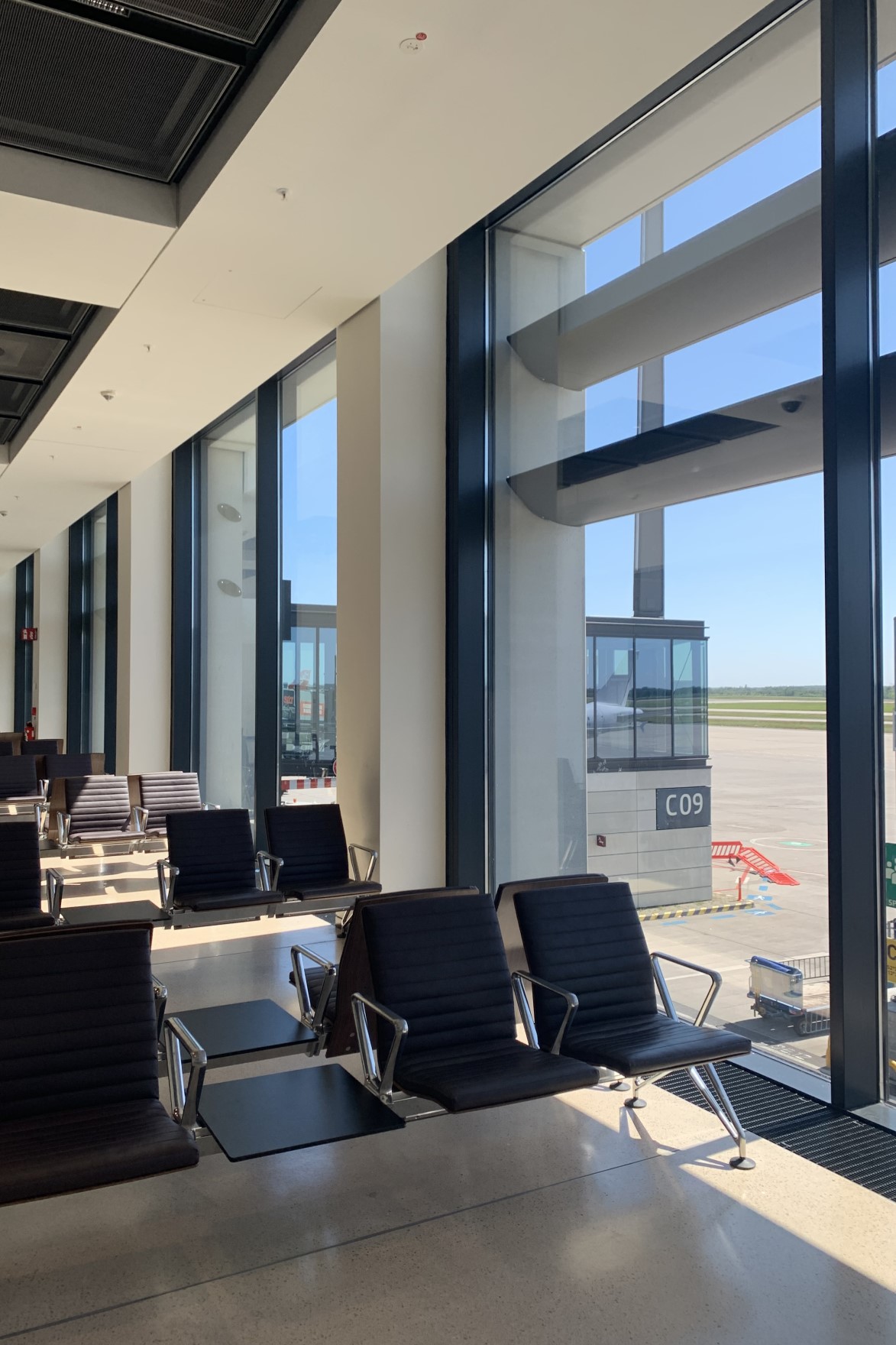
Seating area in the airport terminal. Large windows with shading modules at the top provide a view of the apron.

Efficient cooling and air conditioning

A shading system was installed at Pier South to reduce direct sunlight through the large glass surfaces. The building therefore heats up less and the energy requirement for cooling is reduced by 140,000 kWh each year. The cooling systems are ideally adapted in line with the actual demand by an intelligent control system. This combination of passive shading and demand-based cooling has reduced the required cooling capacity in the Pier South area by 10 per cent. This creates pleasant temperatures as well as saving a considerable amount of energy.

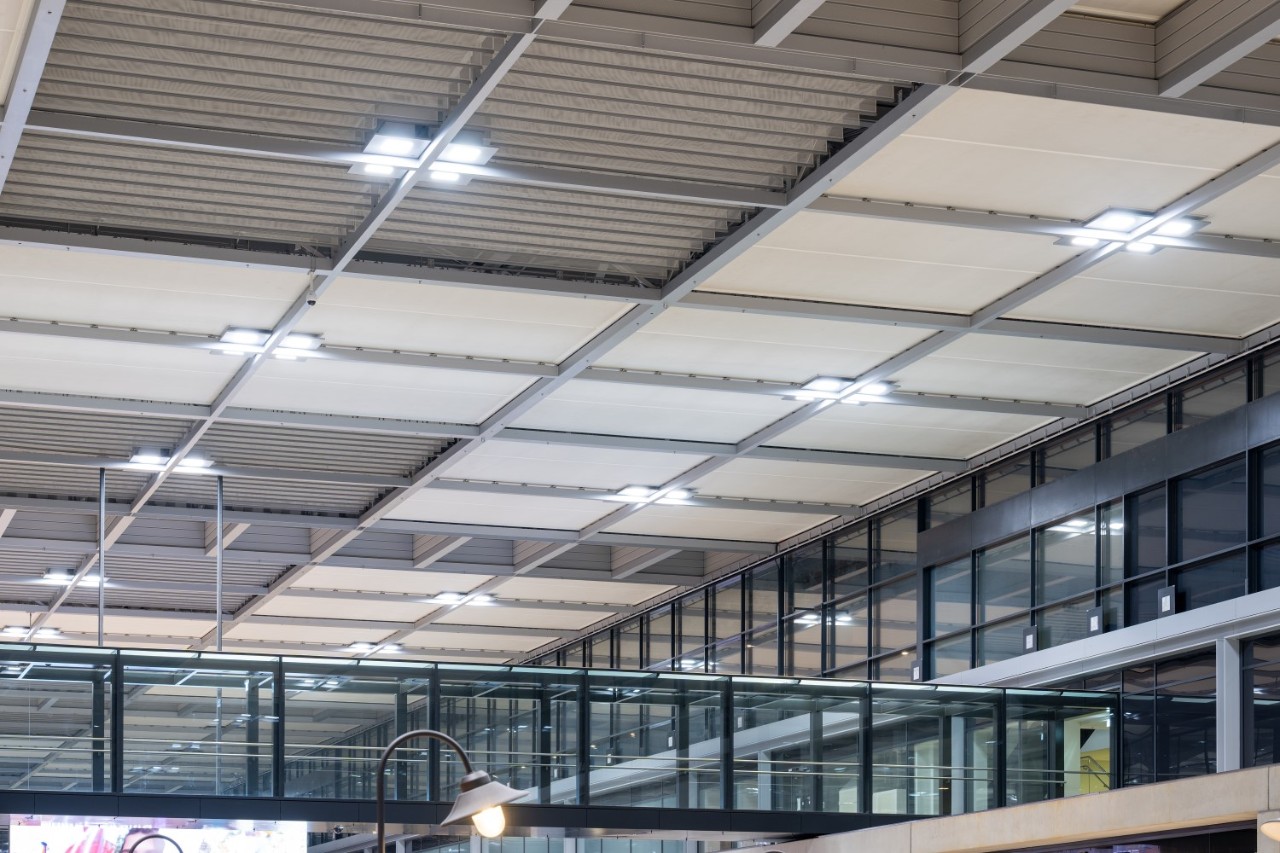
Ceiling of the Terminal 1 check-in hall with LED lighting

Innovative lighting concepts

The switch to modern LED technology is another important component of our energy efficiency concept. Replacing the ceiling lighting in Terminal 1 alone will save about 1,000,000 kWh of electricity each year. In car parks P3, P7 and P8, an intelligent lighting control system has been installed that regulates the lighting according to demand, saving a further 1,000,000 kWh each year. The lighting automatically adapts to the time of day and the actual use of the car parks.

"Backstageberlinairport: focus on sustainability" video (YouTube)

Energy management system in accordance with ISO 50001

The airport company operates an energy management system in accordance with ISO 50001, which aims to continually minimise the negative effects of operational activities on the environment and climate, and continually improve energy efficiency. We set ourselves specific targets in respect of reducing energy and resource consumption as well as negative effects on the environment.

We continually monitor, evaluate and document the negative environmental impacts resulting from our business activities as well as the consumption of resources and energy. We take further steps in good time if achieving environmental and energy-related goals is jeopardised.

Our energy management is certified in accordance with ISO 50001. This guarantees:

  • Continual improvement of energy efficiency
  • Systematic reduction of negative environmental and climate impacts
  • Regular monitoring and documentation of energy consumption
  • Proactive intervention in the event of variations from energy goals

Environmental and energy guidelines