

The most important fields of action
We are on our path to CO2 neutrality. Additional measures are required in a wide variety of areas along this path. About 95 per cent of our emissions inventory (Scope 1 + 2) are attributable to the airport’s energy supply. Accordingly, the decarbonisation of the energy system is crucial to achieving the climate targets. The remaining five per cent are largely attributable to the company's own ground mobility of our vehicle fleet. Therefore, the conversion of ground mobility to alternative drive systems and fuels characterises forward-looking airport operations.
In our CO2 roadmap, we have described key fields of action that have an impact on a large number of operational areas at the airport. These range from further increasing energy efficiency, in accordance with ISO 50001, within the infrastructure and individual technical systems, to use of renewable energies and using synergies at the location.
Our fields of action
Transparency, efficiency,
substitution & offsetting
Within the CO2 roadmap, we work according to a classic sequence:
- First, we generate maximum transparency to have a good data basis for decision-making with a lot of information.
- The next step is to implement an efficiency measure based on transparency (where appropriate).
- Once all sensible efficiency measures have been utilised, the energy source is substituted.
- Provided that all technical options are fully utilised, the remaining maximum of 10% of emissions from the base year 2010 may be offset.
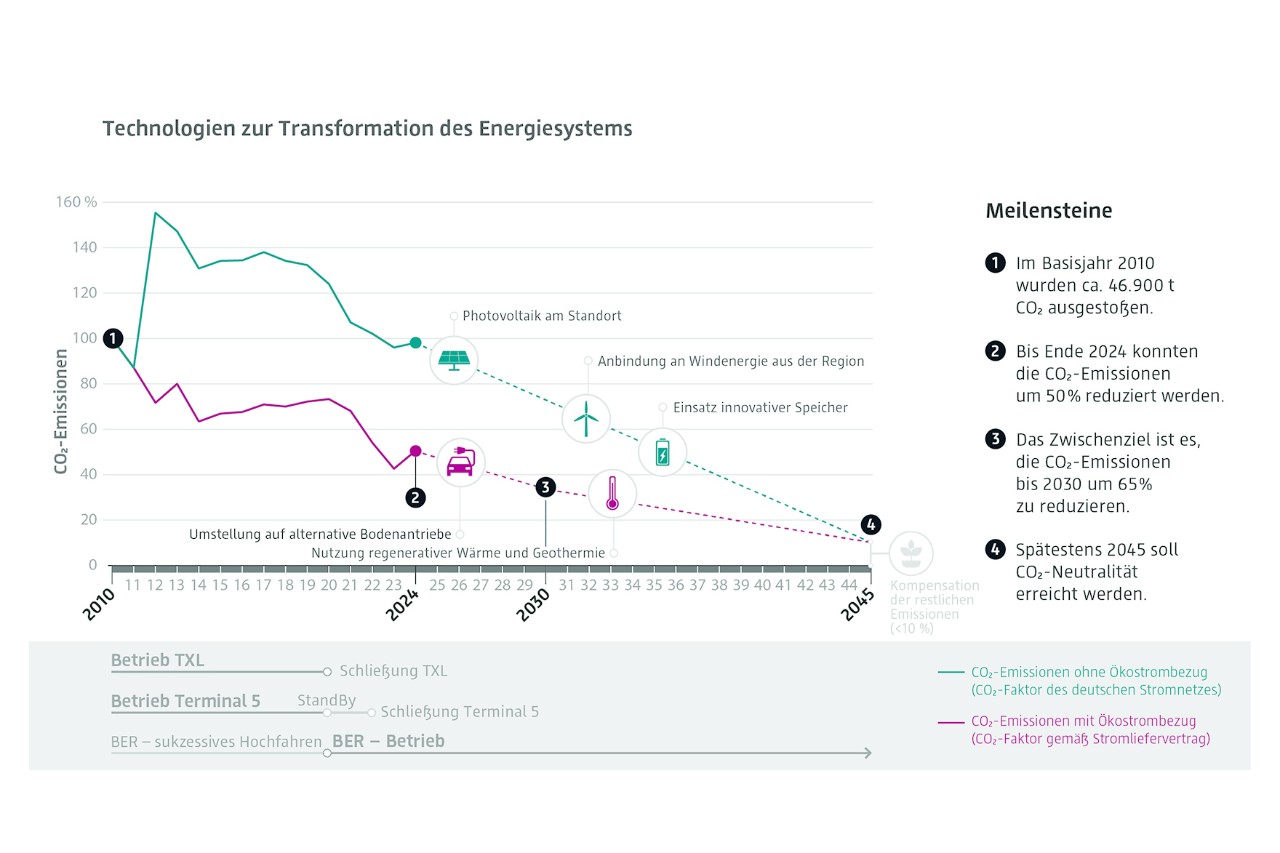
Our roadmap outlines the measures that can help us further reduce our Scope 1 and Scope 2 emissions in the future. We are focusing on energy efficiency, renewable energy and innovative technologies.
By 2030: Energy Efficiency, Mobility & Renewable Energy (Electricity)
- We operate an ISO 50001-certified energy management system that continuously monitors energy consumption and continuously improves energy efficiency.
- We are progressively converting our lighting to LED.
- We use modern software to control building services.
- We adapt processes to improve energy efficiency.
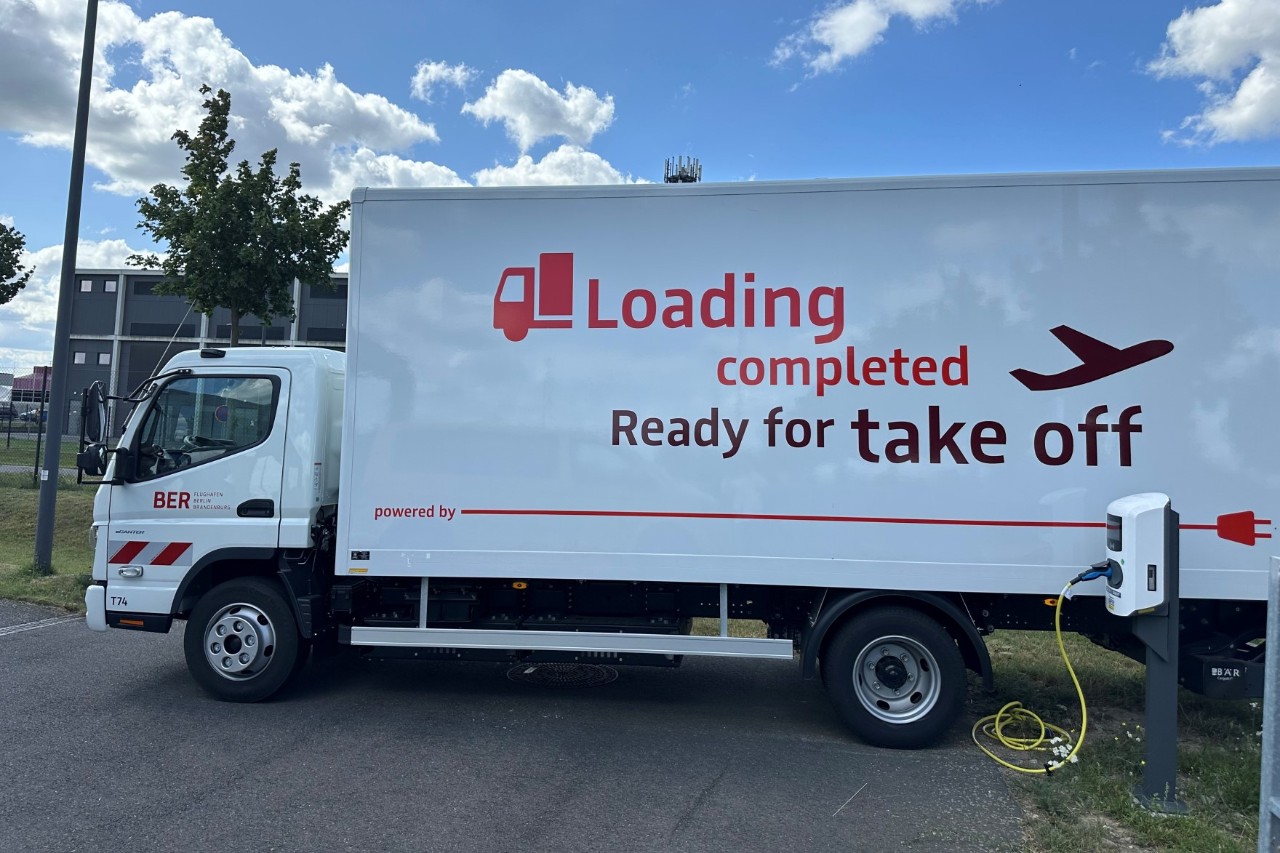
- We are converting ground vehicles to alternative drive systems.
- The introduction of alternative fuels serves as a bridging technology.
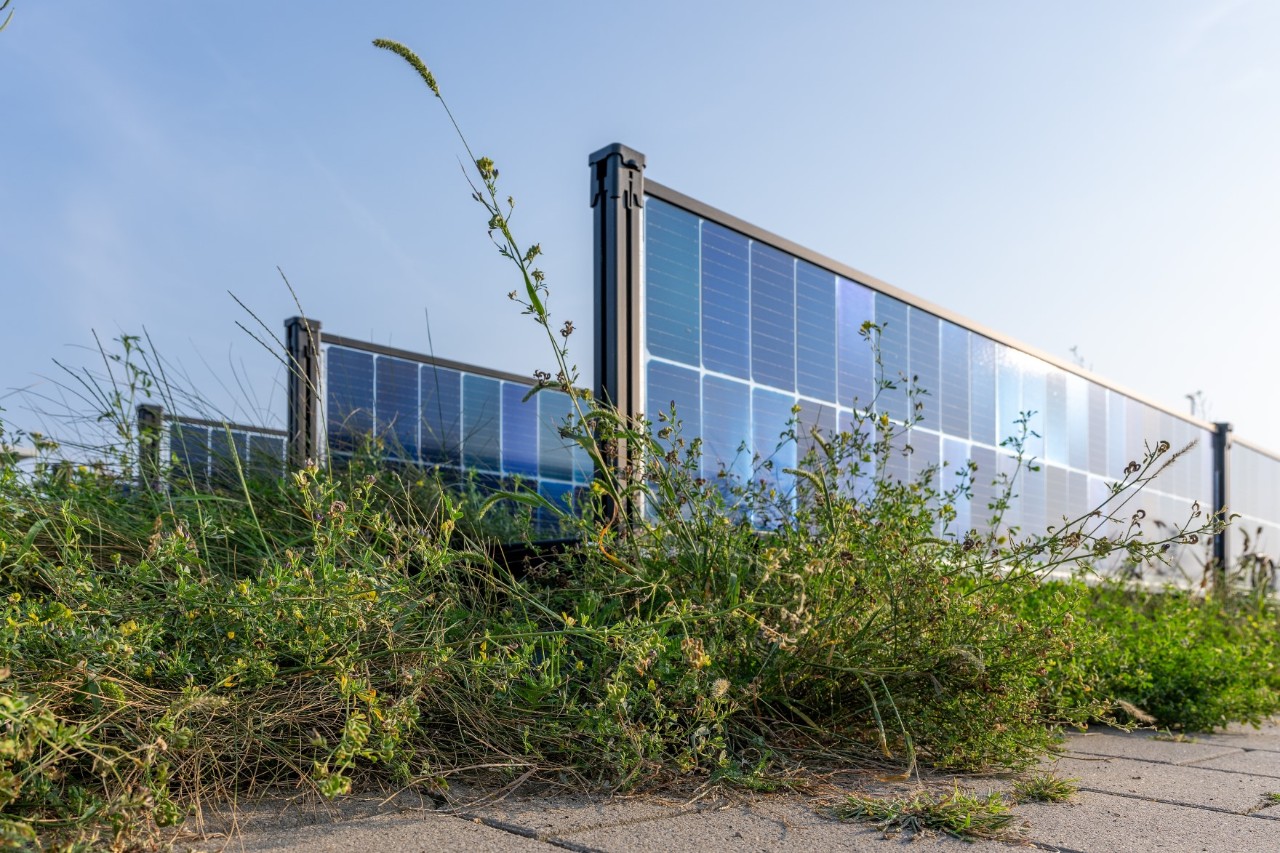
- We are already focusing on expanding renewable energy at the site by installing photovoltaic systems.
- We use Power Purchase Agreements (PPAs) and electricity with certified guarantees of origin from the Federal Environment Agency.
From 2030: Integration of energy, heating and storage solutions
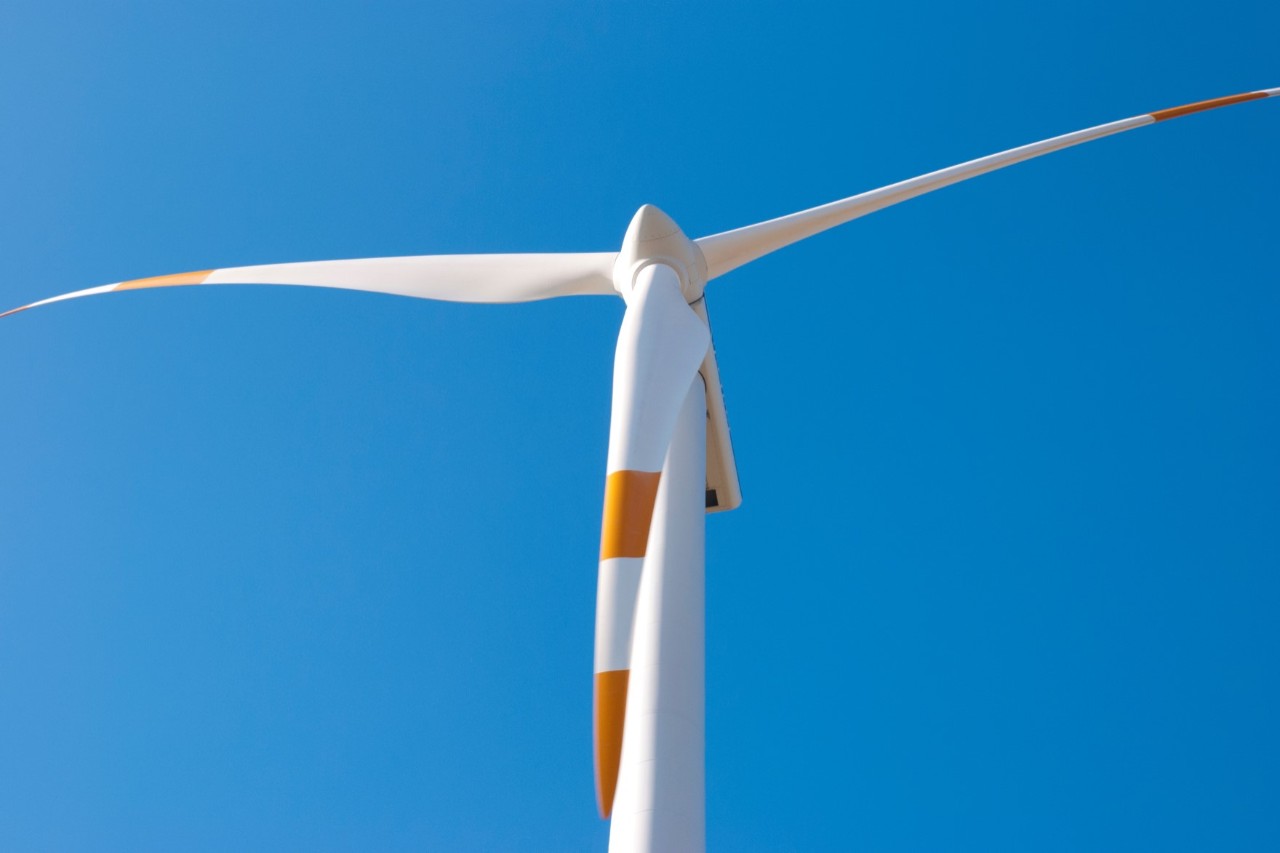
- We are exploring the possibility of connecting wind energy from the region to the airport to increase the share of renewable electricity in our energy mix.
- Geothermal energy can contribute to the sustainable heating and cooling of the airport and reduce natural gas consumption.
- Future, innovative storage solutions will help to use renewable energy more efficiently and balance out fluctuations in supply.
By 2045: Offsetting remaining emissions
Only once all technical options have been exhausted can the final – maximum 10 per cent – of emissions from the base year 2010 be offset through mitigation measures.
How to reach us:
-
 Airport information (24/7)
 -
 Find the right contact


