Take-off and landing procedures at BER
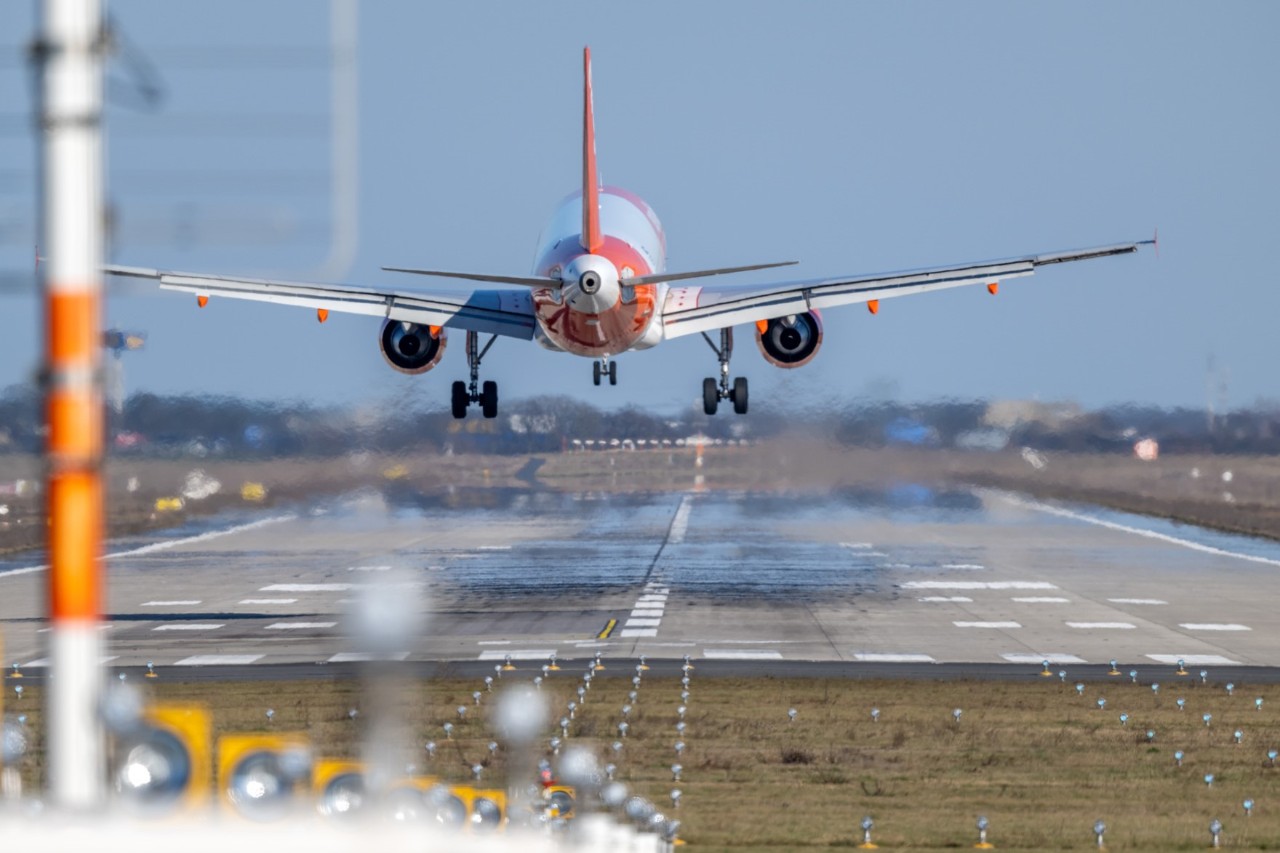
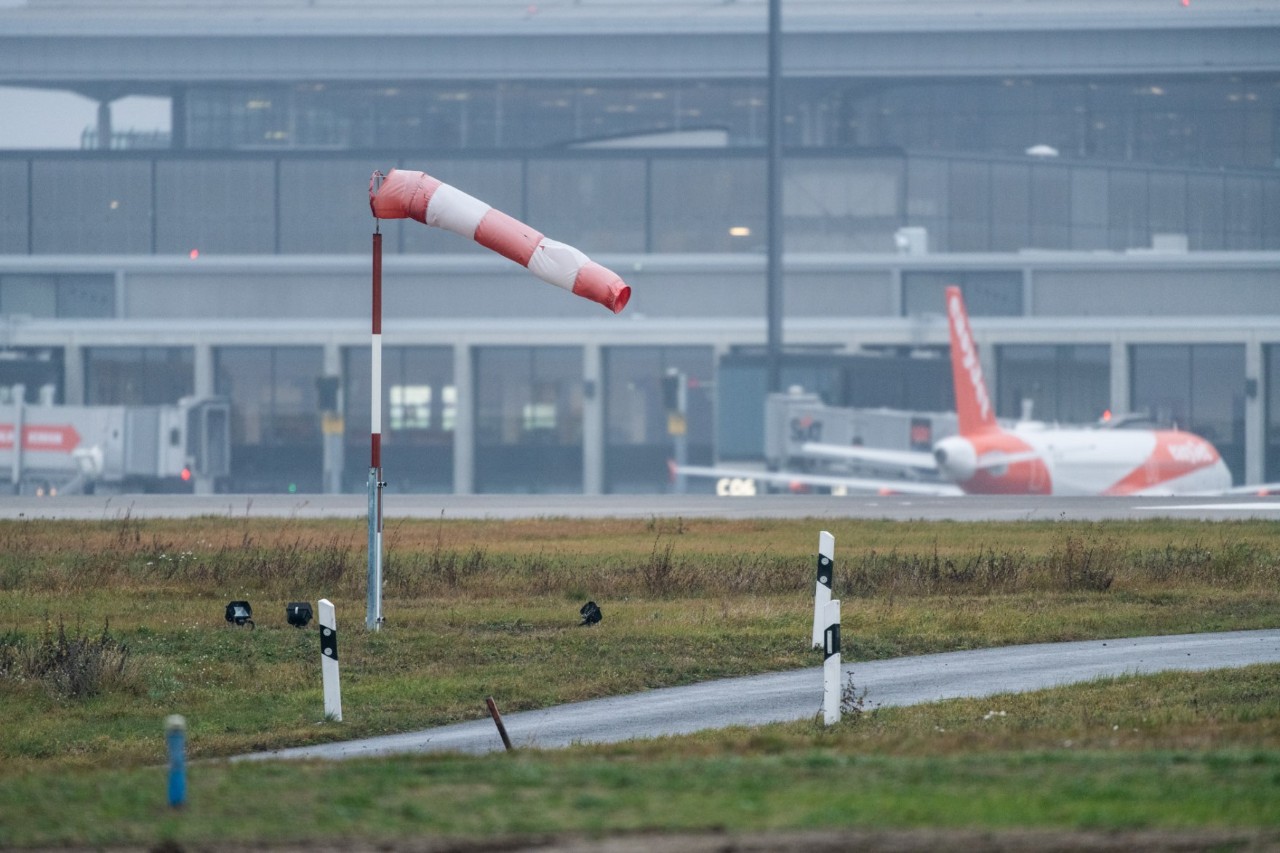
Wind determines the operating direction
Allocation of flight routes in 2025
In 2025, more than 70 per cent of operations at BER were westbound. The focus of flight operations was on take-offs on routes via Dahlewitz and Mahlow. The D24L flight route accounted for 22 per cent, and the D24R flight route for 14 per cent of all flight movements in 2025. For landings, the focus was on the A24L flight route with 20 per cent and the A24R flight route with 16 per cent.
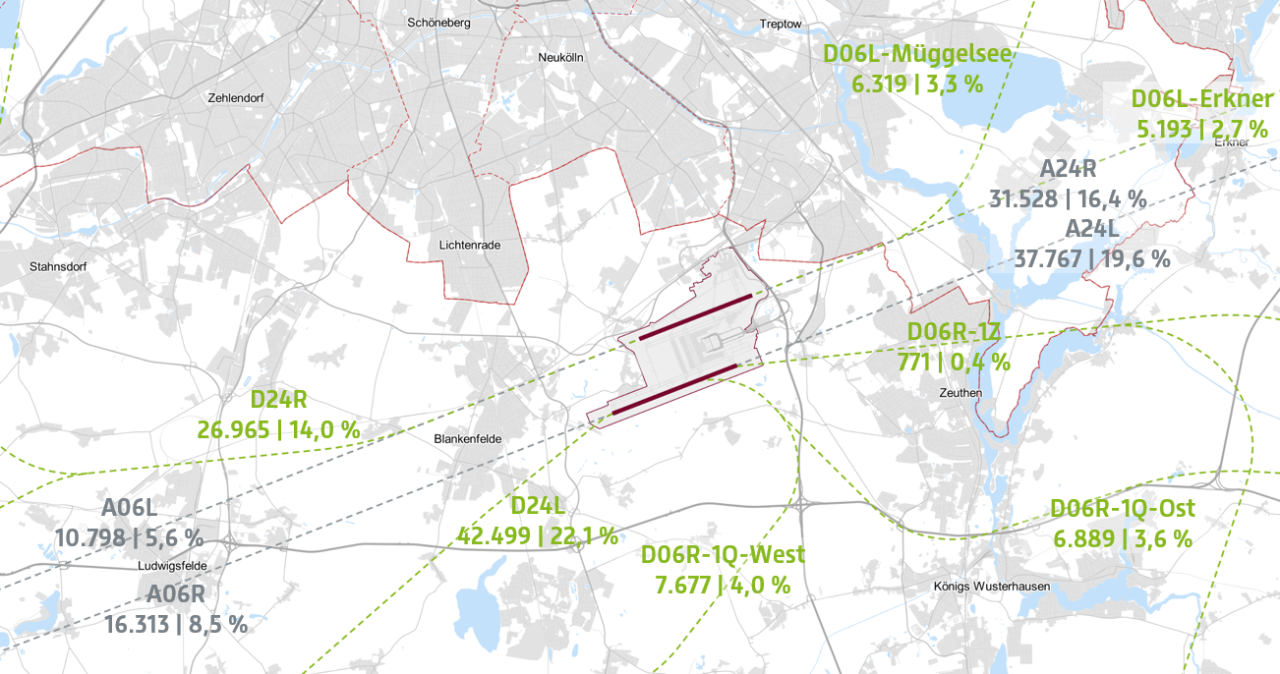
Variations from flight routes are possible
Variations from flight routes are not uncommon during airport operations. These arise when pilots make requests to the tower. Air traffic controllers there decide on clearance in individual cases. As a matter of principle, air traffic controllers may grant permission for departing aircraft to leave the flight path if the aircraft has reached an altitude of 1,500 metres (for conventional jet engines) or 900 metres (for propeller aircraft). This allows pilots to take a more direct course to the destination airport. This means flight paths are shortened and CO2 emissions avoided.
Flight tracks of the busiest days in 2025
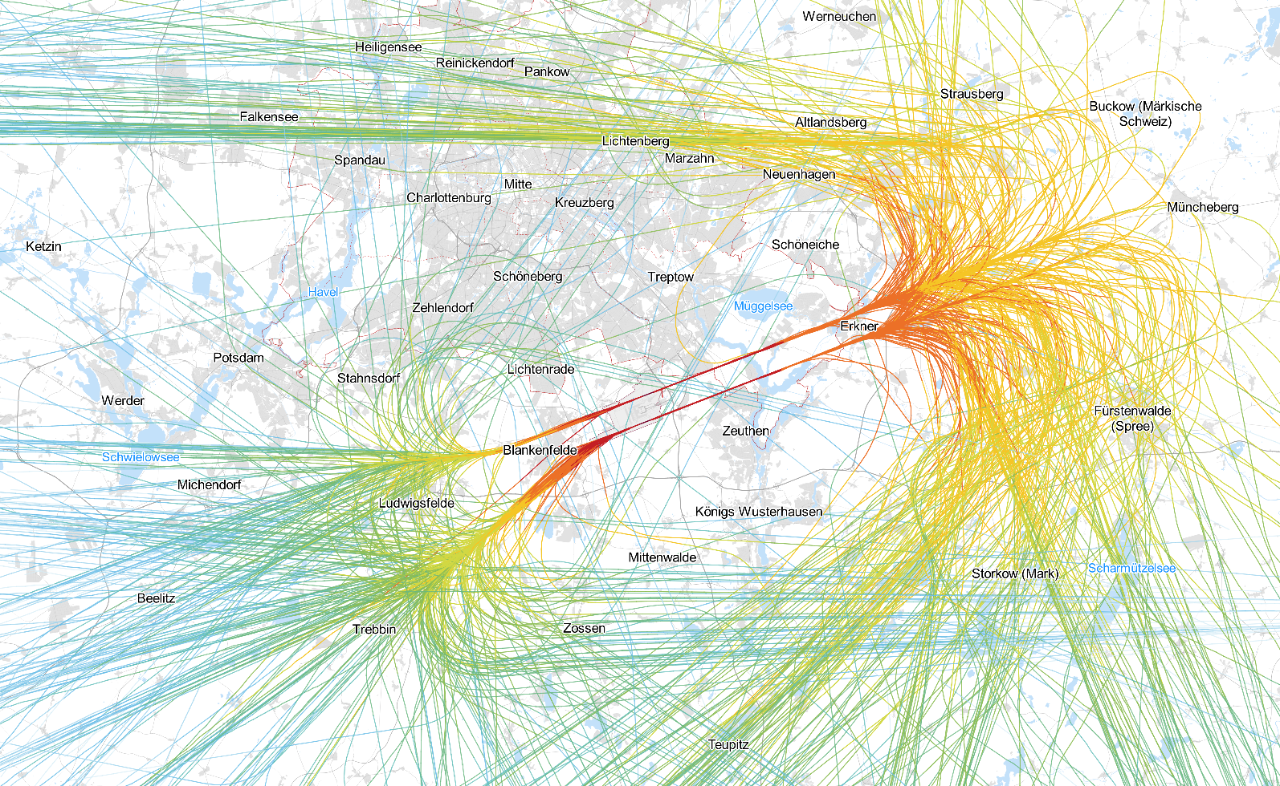
For westbound operations: The highest number of flight movements heading west occurred on Thursday, 5 June, when 673 aircraft took off and landed in that direction. The diagram shows how the vast majority of aircraft, on take-off from the north runway, spread out over Ludwigsfelde and set course for their destinations. Take-offs from the southern runway show slightly wider radar tracks over Dahlewitz due to the slight bend towards the south. South of Ludwigsfelde, the flights fan out very clearly. The flight paths of the vast majority of landings run straight towards the northern and southern runways, roughly at the level of Erkner.
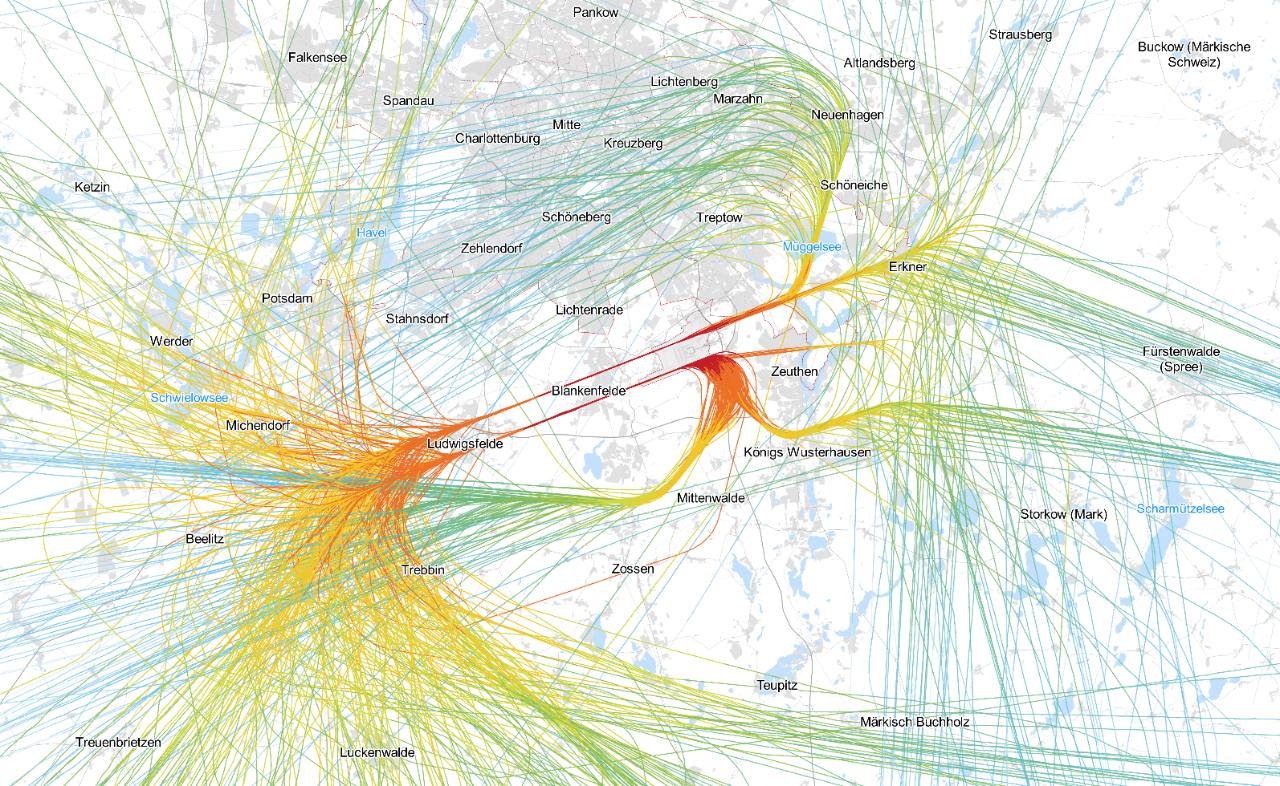
With an easterly wind: Most aircraft were flying eastwards on Friday, 26 September, when there were 657 take-offs and landings in that direction. In the case of take-offs, the routes over the Müggelsee and Erkner, as well as the Hoffmann curve to the south, are very clearly visible. For landings, almost every aircraft lined up, as is customary, for the approach at the Ludwigsfelde mark.
How to reach us:
-
 Airport information (24/7)
 -
 Find the right contact


