

Dumping kerosene is an
absolute exception
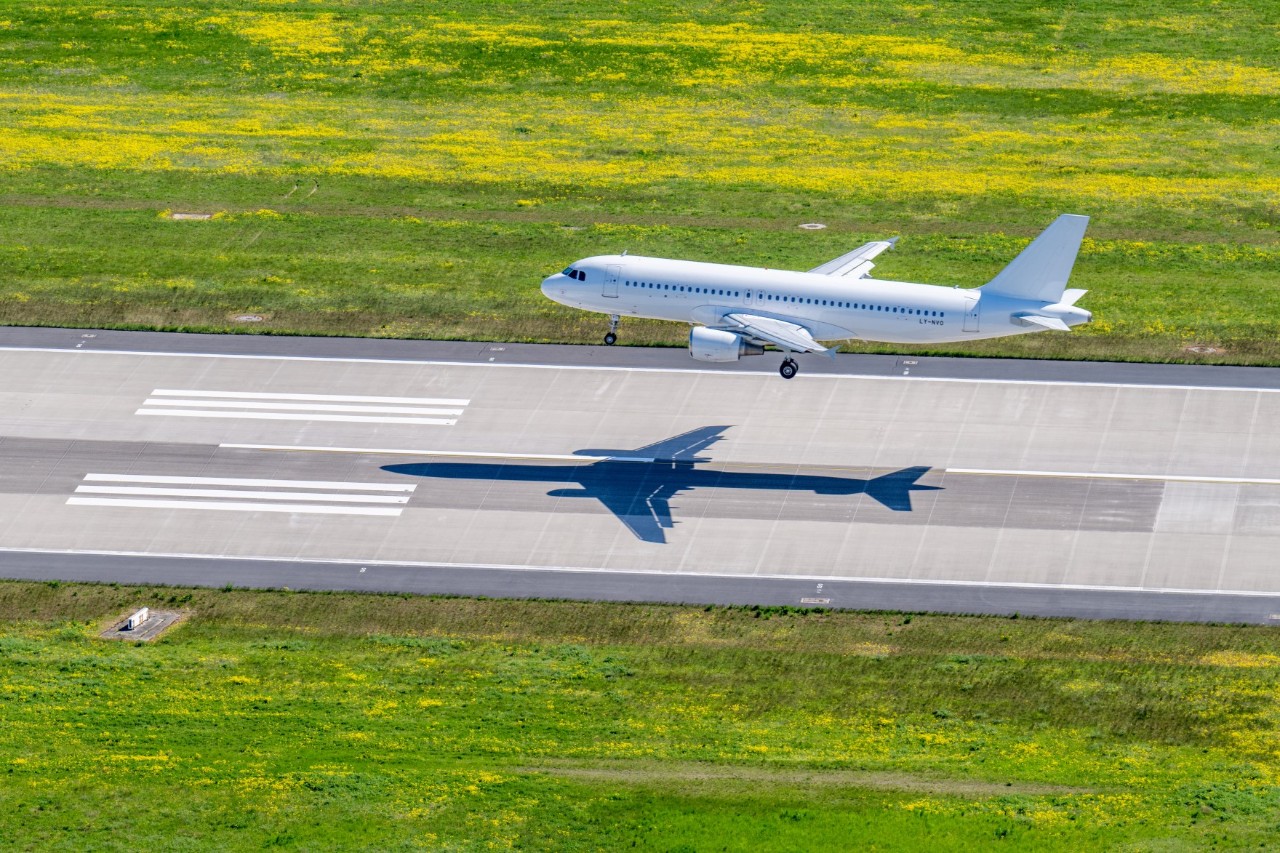
Few rumours in connection with air traffic are as persistent as that of frequent or even regular dumping of kerosene before landing. However, this is a misconception, the cause of which lies in the fact that during the landing approach, especially in humid weather, clearly visible turbulence of vapour water can be seen behind the wings.
Why might it be necessary to dump kerosene?
Only a few long-haul aircraft have the technical equipment to dump kerosene during the flight. These aircraft include, for example, the Airbus A340 and A380 as well as the Boeing 747, 767 and 777, for which the maximum permitted take-off weight is significantly higher than the maximum permitted landing weight. During a regular long-haul flight, the aircraft consume a lot of kerosene and, therefore, lose so much weight that a safe landing is possible without any problems. In the event of an air emergency requiring an immediate landing, the pilot has the option of reducing the weight of the aircraft by means of rapid kerosene dumping and, therefore, reaching the permitted landing weight. However, this is an absolutely exceptional situation in which the sole priority is the safety of the passengers and crew.
How is kerosene dumped?
The decision to dump kerosene lies solely with the cockpit crew and ultimately with the pilot in charge. German Air Traffic Control will be informed and the air traffic controller will assign a suitable airspace with the lowest possible traffic volume over unpopulated or sparsely populated areas. The rapid fuel dump usually takes place between 4,000 and 8,000 metres altitude, but at least above 1,800 metres. The flight speed is at least 500 km/h. There is no air traffic in the corresponding airspace during the dumping process or for a certain time afterwards.
Notifiable event!
The dumping of kerosene must be reported and is stored in a national database. The airline in question must report the quick release of kerosene to its responsible supervisory authority. For German airlines this is the German Federal Aviation Authority (LBA). However, a report is also submitted by German air traffic control to the Federal Supervisory Authority for Air Traffic Control (BAF). BAF in turn reports back to the LBA to ensure that all kerosene quick dumps in German airspace are recorded. The German Federal Aviation Office provides information about incidents in recent years.
How to reach us:
-
 Airport information (24/7)
 -
 Find the right contact


