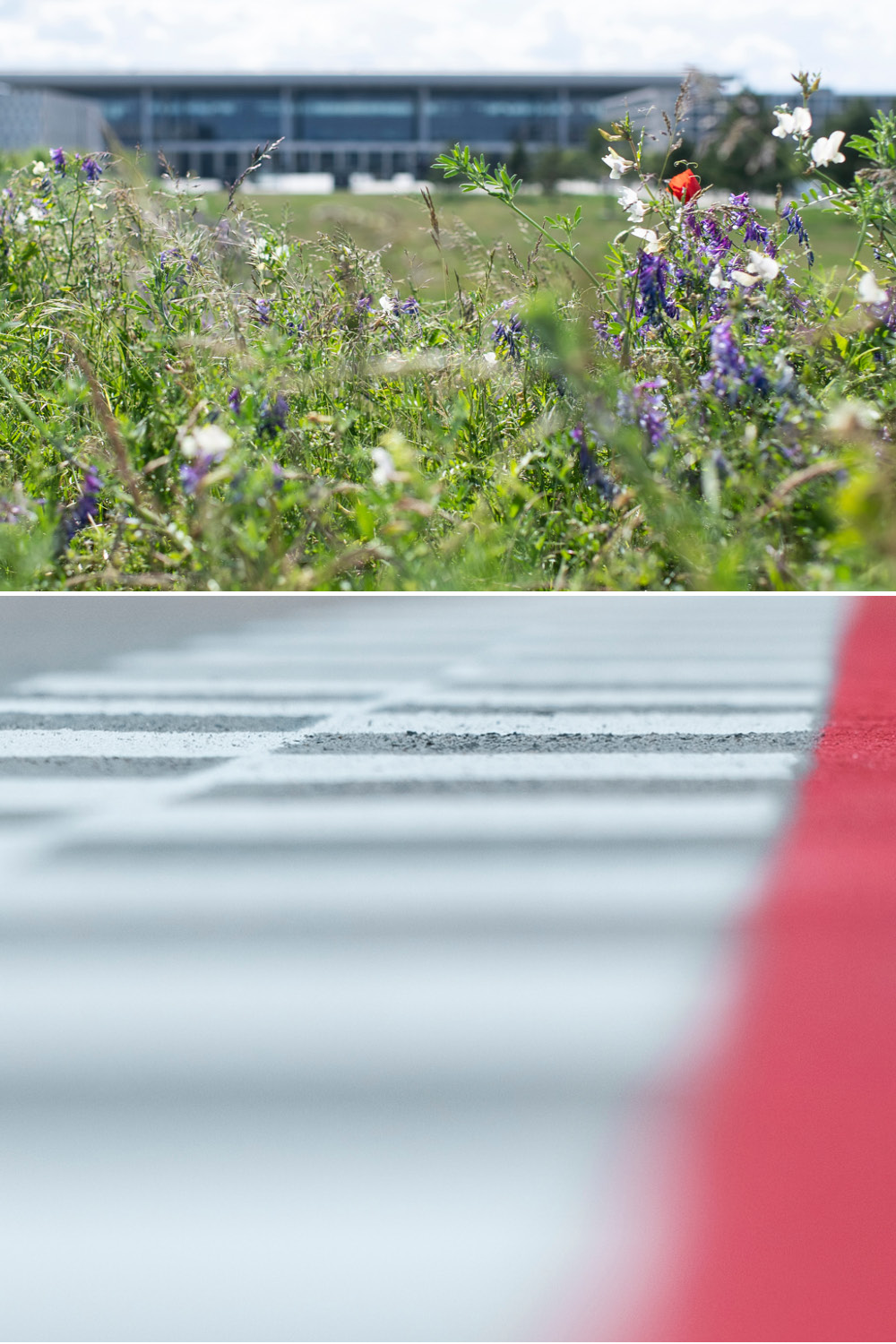
Meadow in front of Terminal 1

Waste

Less waste, more future

It is obvious that more than 20 million travellers a year generate waste at the airport. However, waste is also generated during construction work at the airport, in technical facilities and, last but not least, in the offices and the airport company’s (FBB) workshops. In accordance with the German Closed Substance Cycle Waste Management Act (KrWG), a distinction is made between hazardous waste (e.g. old fluorescent lamps or construction waste containing hazardous substances) and non-hazardous waste (e.g. municipal waste or road sweepings) and the waste is disposed of properly in accordance with the German Waste Recovery and Disposal Ordinance (NachwV).

Strongly fluctuating balances

Waste volumes differ considerably from year to year because irregular items such as construction work or refurbishment activities, in particular, have a huge impact. This can also be seen in a comparison of previous years.

2022 2023 2024
Total waste volume (tonnes) 38.526 51.236 12.088
Hazardous waste (tonnes) 963 24.130 2.563
Non-hazardous waste (tonnes) 37.563 27.106 9.525
Load more

Solutions for less waste

FBB relies on various and diverse projects to reduce the volume of waste at BER as far as possible and sustainably.
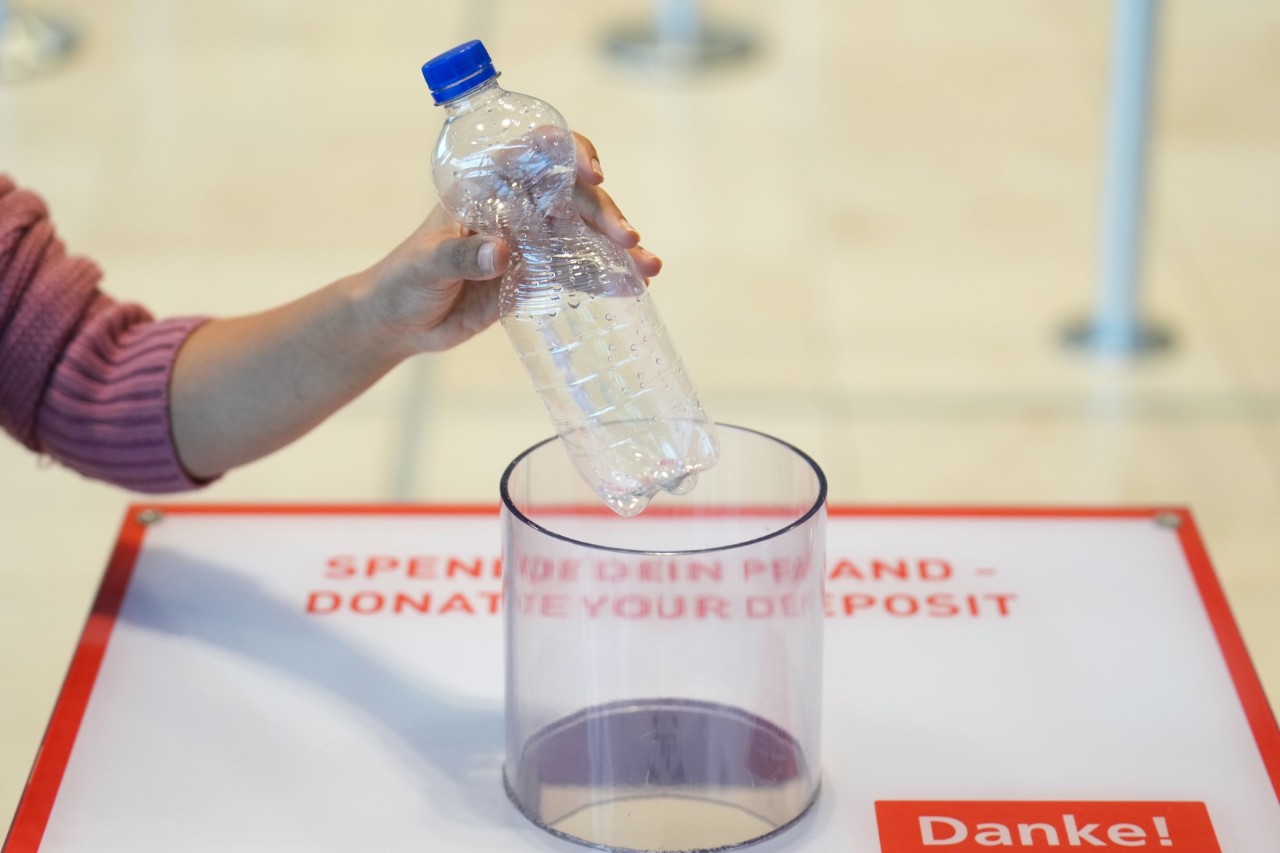
An empty plastic bottle is thrown into a deposit collection container.

“Donate your deposit”

The “Donate your deposit” social community project has collected an average of more than EUR 100,000 each year since 2017. A lot of money that goes exclusively to the Berliner Tafel. Travellers can donate their deposit bottles here just before the security checks. At the same time, the discarded bottles are no longer disposed of as residual waste but are recycled. As a result, environmental protection and social commitment can be sustainably combined.

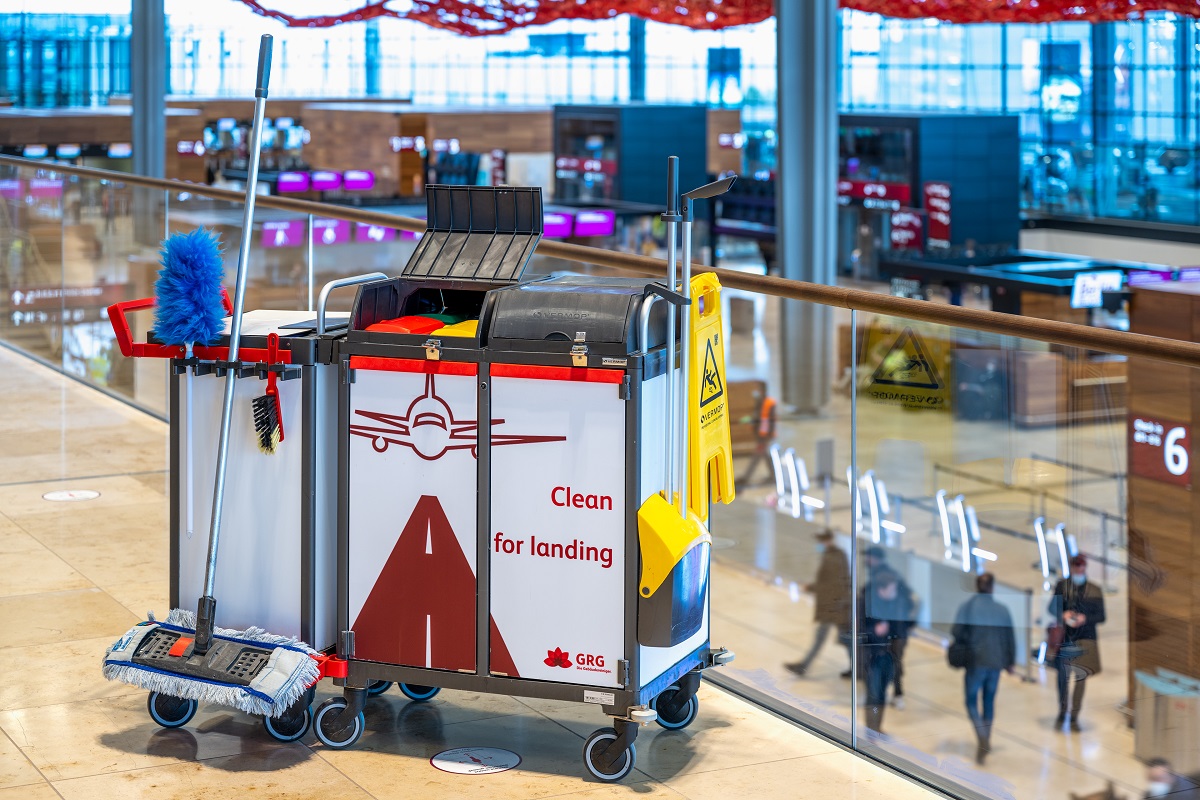
Cleaning trolley in the check-in hall of Terminal 1 at BER

Cleaning

The comprehensive topic of cleaning offers great potential for minimising waste. Measures here range from use of recycled cleaning water and dispensers for cloth towels and soap to cleaning with fully biodegradable cleaning agents. This means that waste in the respective areas can be reduced by up to 75 per cent.

Pictogram: plate, knife and fork

Deposit and pre-ordering

Some 2,000 employees work for FBB and many of them regularly eat in the company’s canteens. A deposit system with reusable trays and an online ordering system enable FBB employees to inform the canteen of their meal requests the day before. This helps avoid food waste and plastic waste each day.

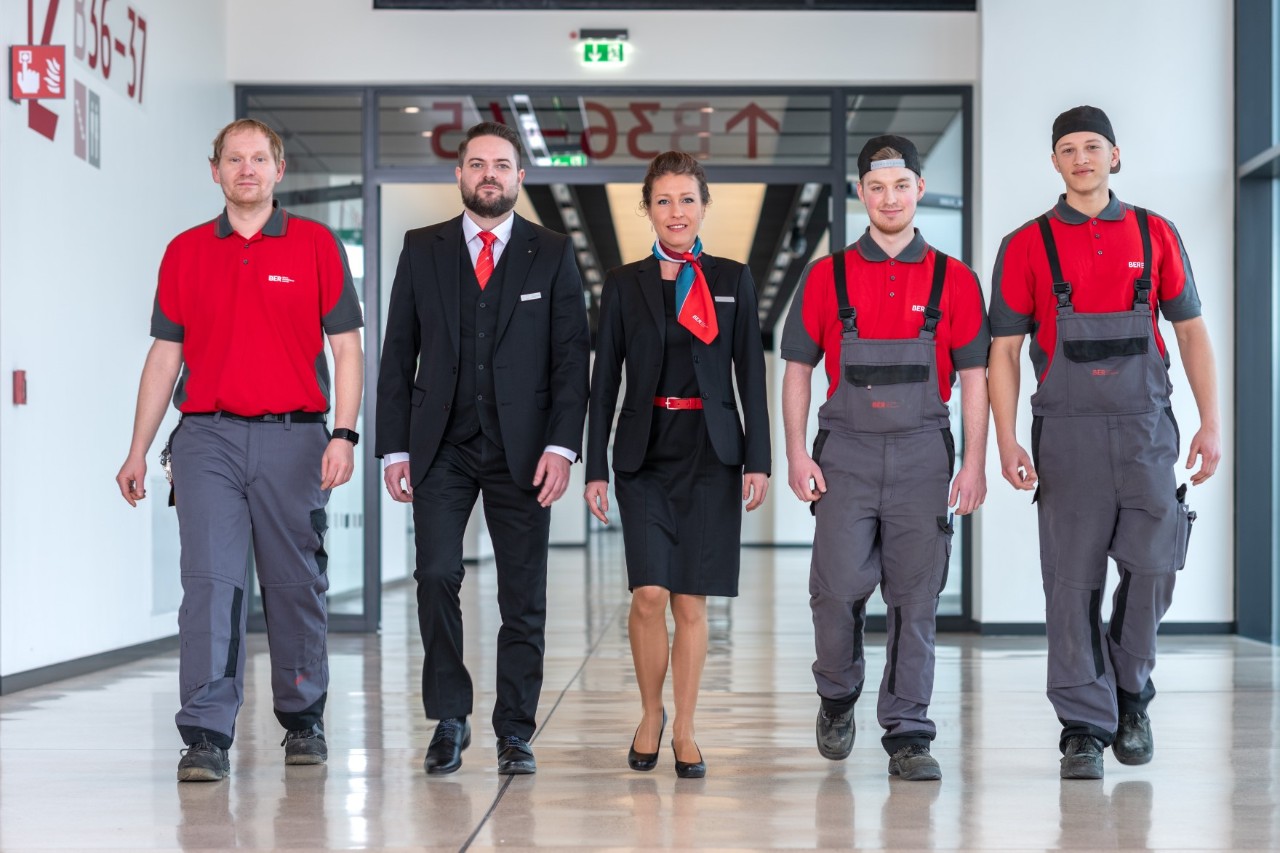
Five people in different work uniforms walk towards the camera, smiling.

Collective orders reduce packaging waste

Shipping clothing can create an enormous amount of waste but uniforms are essential for many activities at the airport. FBB has reorganised the ordering process for workwear to reduce packaging. Clothing is now no longer delivered individually for each person but in bulk orders.