Dealing with water is becoming
increasingly important
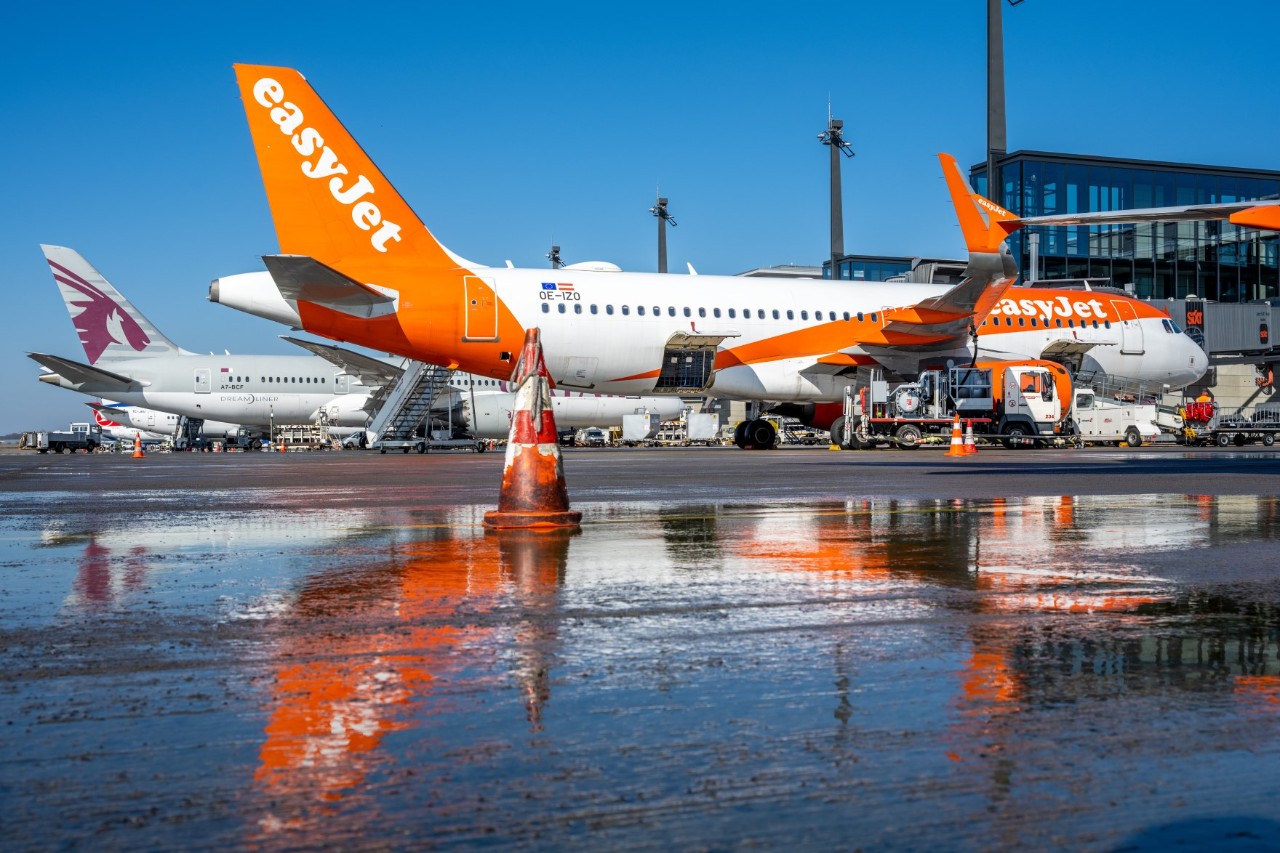
More frequent and longer periods of drought in the summer, heavy rainfall events and the handling of potentially hazardous substances in technical airport facilities are making the issue of water management at BER increasingly important. The handling of rainwater, drinking water and waste water is of particular importance for the airport company (FBB). In that respect, FBB keeps an eye on both legal requirements and consumption and conducts regular checks and inspections with experts.
Large areas mean a lot of precipitation
Classification according to quality classes
The BER covers an area of approximately 1,470 hectares, making it about four times the size of Tempelhofer Feld. The areas are used for a wide variety of purposes, which means that the rainwater runoff can vary greatly in terms of pollution. For this reason, rainwater is classified into three classes based on the airports planning approval.
- Rainwater from roof areas and parking areas is classified as rainwater class A.
- Rainwater from taxiways and flight operation areas (such as runways), which may be contaminated with de-icing fluids in winter, is classified as rainwater class B.
- Rainwater from parking areas, which may be contaminated with kerosene in the event of an accident and with surface and aircraft de-icing fluids in winter, is classified as rainwater class C.
Soil filters are used to treat Class B and C rainwater. In addition, special separators are used for Class C. These separators can remove fuel or oil from the rainwater.
Where does the rainwater go?
Only Class A rainwater may be allowed to seep away locally via troughs and underground rainwater storage tanks (infiltration ditches). Rainwater in classes B and C is collected in a BER pipe network approximately 300 km long and is sampled regularly and treated in soil filters as required. Provided that the legal limits are complied with, the water is either locally discharged into the Selchower Flutgraben and the Glasowbach or seeps away via a large trough at the southern runway. As an alternative to the soil filters, the class B- and C-rainwater can also be disposed of via the sewage treatment plant in Waßmannsdorf if the pollutant levels are too high.
What happens during heavy rainfall?
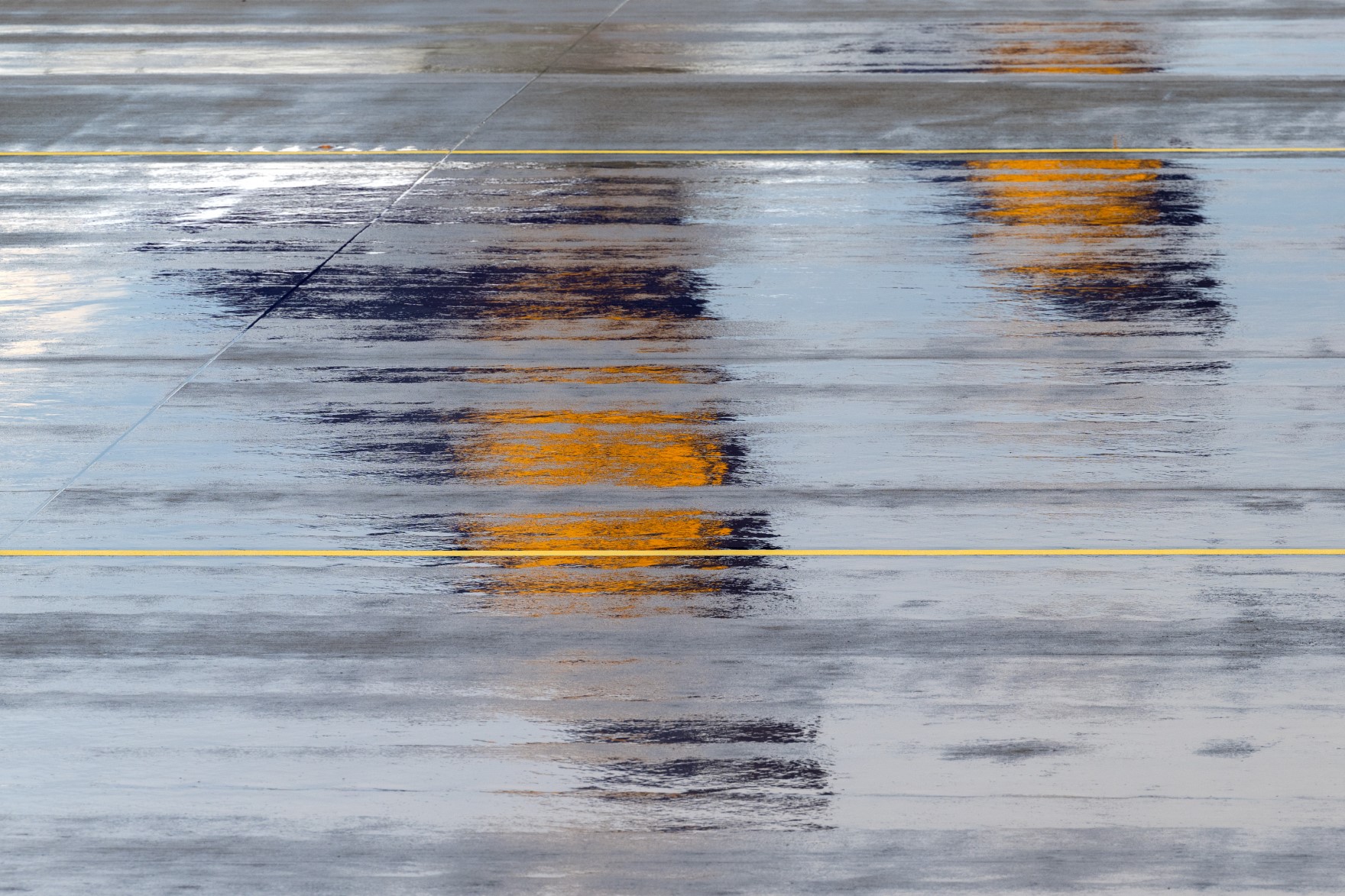
During very heavy rainfall, up to 100 million litres of water can accumulate at BER per day, which is the equivalent of 40 Olympic swimming pools or 500,000 bathtubs. Even with such exceptionally high rainfall, the drainage system is able to safely absorb and discharge the water. For this reason, the large infiltration basin at the BER southern runway alone can temporarily store almost 140 million litres of water. At the same time, class A rainwater can be discharged into surrounding water bodies.
Efficient use of drinking water
The amount of drinking water consumed depends primarily on the number of passengers and has already been significantly reduced in relation to the number of passengers. After 38 litres of drinking water for each transport unit (passengers and freight) were used in 2021, the figure then dropped to 21 litres.
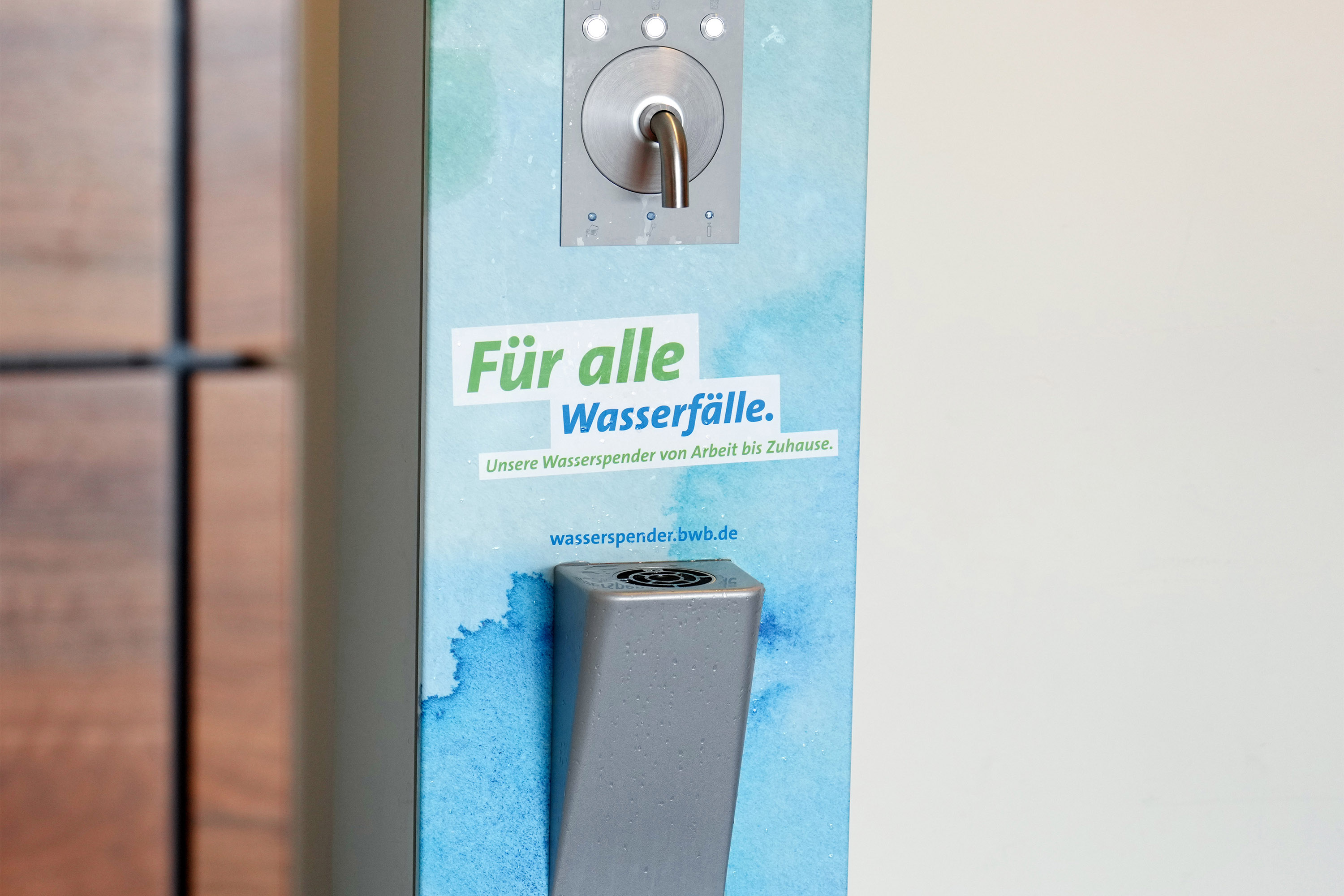
Drinking water dispensers at BER
In total there are six drinking water dispensers, which are freely accessible to everyone, on level E1 in the departures area.
Waste water balance varies from year
to year
The amount of waste water depends on various technical processes as well as natural conditions. One of the significant and uncontrollable factors for the volume of wastewater is the weather and the associated amount of precipitation. This can vary greatly from year to year. Nevertheless, the wastewater balance has improved: While 92 litres for each traffic unit were still generated here in 2021, consumption dropped to 41 litres thereafter.
How to reach us:
-
 Airport information (24/7)
 -
 Find the right contact


