Information about implementig
noise protection
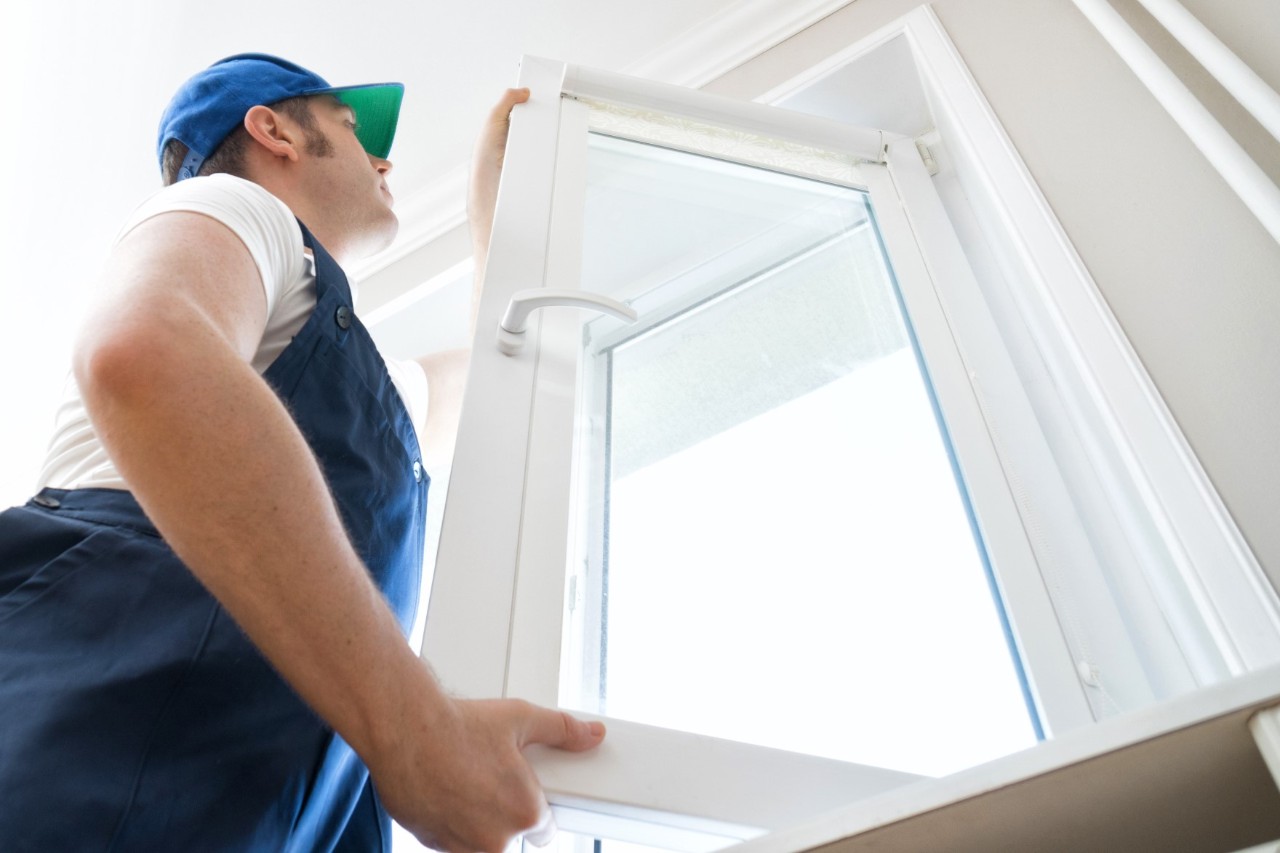
The options for sound insulation are constantly evolving. The BER sound insulation programme usually uses fans, windows and roof insulation, which are installed by various construction companies. Various modules show pragmatic approaches to the realisation of sound insulation.
Windows, ventilators and insulation
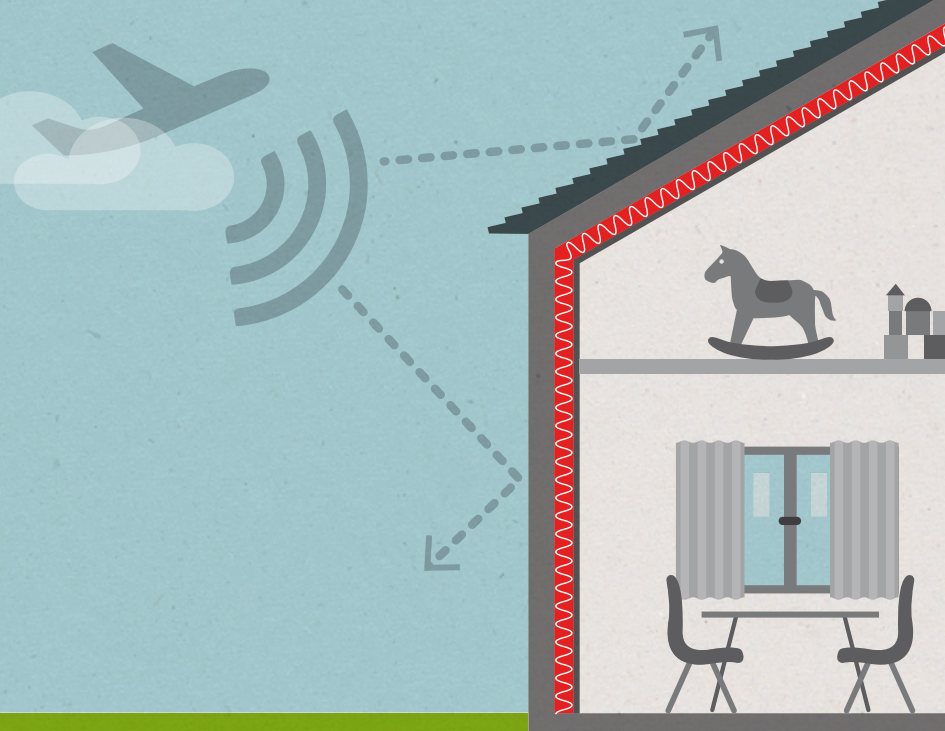
Following a survey, an engineering firm commissioned by the airport company (FBB) determines which noise protection measures are required at the respective property. The owners receive the outcome in the form of a claim assessment from FBB. Potential noise protection measures include, above all, insulation in walls, roofs and ceilings as well as fans and soundproof windows. In that respect, DIN 1946-6 for the ventilation of flats is also taken into account.
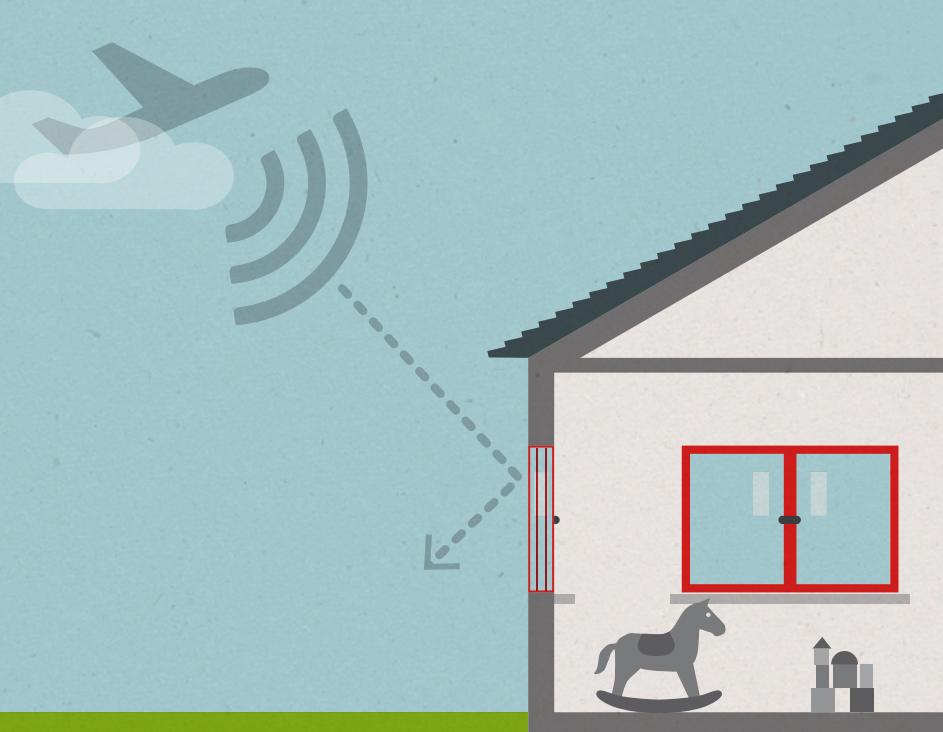
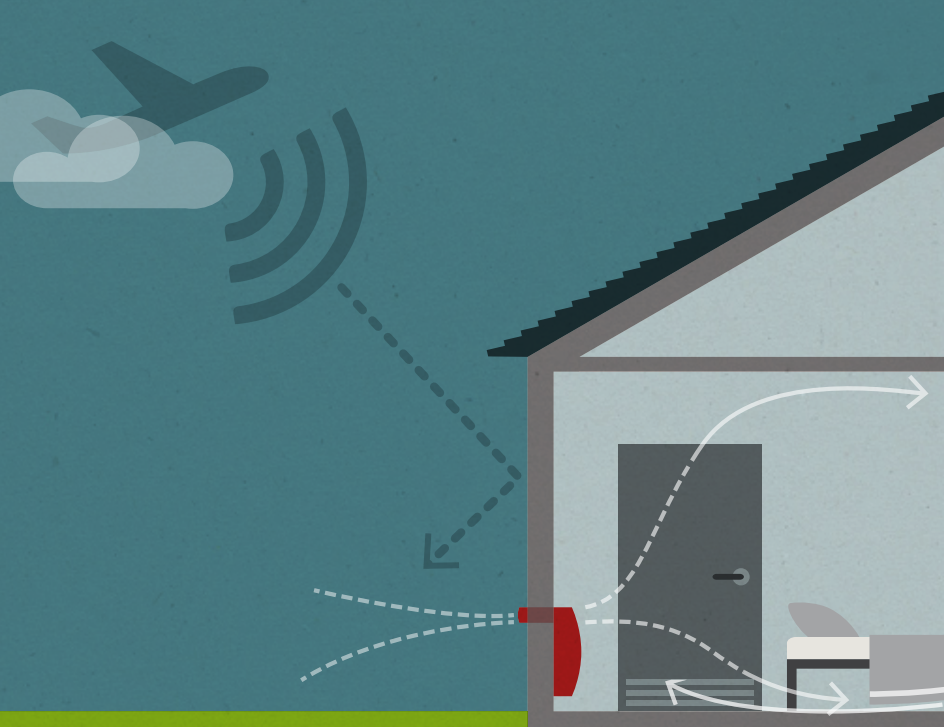
The ventilators can also automatically ventilate the rooms and have a heat recovery system.
Service specifications
Various sound insulation measures are used as part of the BER sound insulation programme. An overview of all measures can be found in the various framework service specifications (RLV), which are updated regularly. This update ensures that the noise abatement measures are subject to prices that have been confirmed by experts and are in line with the market at the time of forwarding the claim determination and for an appropriate period.
2026 framework service catalogue
- Introduced in July 2026
- Subdivided into the four lots of ventilation technology and soundproofing fans, windows and front doors, insulation and roof surface and roof exit windows
Building specifications for the 2026 framework service catalogue (in German)
2024 framework service catalogue
- Introduced in May 2024
- Subdivided into the four lots of ventilation technology and soundproofing fans, windows and front doors, insulation and roof surface and roof exit windows
Building specifications for the 2024 framework service catalogue (in German)
2022 framework service catalogue
- Introduced in June 2022
- Divided into the four lots of ventilation technology and soundproofing fans, windows and front doors, insulation and skylights
Building specifications for the 2022 framework service catalogue (in German)
2019 framework service catalogue
- Introduced in November 2019
- Divided into four lots: ventilation technology and sound-proofing fans, soundproof windows and front doors, sound insulation and skylights
Building specifications for the 2019 framework service catalogue (in German)
2015 framework service catalogue
- Introduced in 2015
- Divided into four lots: ventilation technology and sound-proofing fans, soundproof windows and front doors as well as sound insulation
Building specifications for the 2015 framework service catalogue (in German)
Lot 1 - Ventilation technology and sound insulation fan (in German)
Find a construction company
Owners can decide for themselves on the construction company that adopts the sound insulation measures in their building. The sound insulation list of the Brandenburg Contract Advisory Centre (ABSt) provides guidance in the search for an expert construction company. You can find numerous construction companies there that adopt noise protection measures. However, owners are not bound by this list and can also commission other construction companies.
Noise protection list of the Contract Advisory Centre (in German)
Modules simplify implementation
The noise protection measures in the day protection area are often very extensive due to the high protection goal and can entail major interventions in the building structure. However, in practice many owners would like to avoid this and instead want more flexible options when adopting the noise protection measures. FBB offers various modules for this purpose.
Extensive construction measures, which entail high costs, are often necessary to implement noise protection. As the owners commission the construction work, they also receive the invoice from the construction company and are therefore liable for payment. The construction company’s invoice is submitted to the FBB, which reviews the eligible costs and transfers an amount to the owner to cover the costs. Normally, the owners do not have to pay the construction company in advance due to FBB’s short payment cycles. However, anyone wishing to avoid having to make advance payments themselves can enter into an assignment agreement with their construction company. In such a case, FBB pays the reimbursement amount to the construction company instead of the owner. At the same time, the owner is released from the obligation to pay the construction company the reimbursed amount.
Owners should note that, even in the case of an assignment agreement, FBB shall only reimburse the maximum eligible cost of the necessary noise protection measures as stated in the determination of claims for structural realisation (ASE-B). This includes such noise protection measures that are listed in the ASE-B or explicitly approved by FBB in an addendum. FBB shall not, in particular, reimburse additional costs resulting from contracts awarded by the construction company to third parties or from price increases due to the economic situation, which arise because the noise protection measures are not implemented promptly. To avoid having to bear the costs of the construction realisation yourself, owners should, therefore, ensure, even in the case of assignment, that they only commission the noise protection measures that are explicitly stated in the ASE-B or are approved by FBB in an addendum.
Owners who wish to use the financing module should discuss the further procedure with their construction company.
As a result of the high level of protection, extensive construction measures and, therefore, far-reaching interventions in the building structure of a house are often necessary. To minimise the interventions, owners have the option of having the measures implemented step by step, i.e. one trade at a time.
However, to prevent additional costs resulting from rising tradesmen’s costs, the measures should be commissioned quickly one after the other and once the owners have received the determination of entitlement for structural realisation (ASE-B). FBB shall not reimburse additional costs that are only incurred because the construction work was not started promptly following receipt of the ASE-B.
Residents who wish to use the module step by step should discuss the further procedure with their construction company.
In the BER noise protection programme, rooms used as living rooms and bedrooms are entitled to noise protection if they comply with the legally prescribed minimum room heights and lighting levels for common rooms. However, FBB is aware that some owners also would like sound insulation in rooms that do not meet these requirements. The low room height module was available for this purpose.
For rooms where the room height or lighting does not comply with the applicable building regulations or those that were valid in the past, residents could apply for noise protection that corresponded to the level of the German Aircraft Noise Protection Act.
The module is no longer available as the application period has expired.
In many buildings, the high level of protection cannot be achieved by installing soundproof windows alone. In such cases, wall insulation is required in addition to the windows. Certified interior wall insulation is provided as standard, which honours the specified sound insulation values across the board. Owners who do not want internal wall insulation can choose the insulation module, which refers specifically to the use of external wall insulation. In this case, they agree with a construction company on insulation from the outside and submit appropriate evidence to FBB that the level of protection is maintained by such external insulation. FBB then contributes to the costs up to the amount that was planned for the internal wall insulation.
Owners who wish to use the wall insulation module should discuss the procedure with their construction company.
Many owners who have already had sound insulation measures adopted based on an earlier cost reimbursement agreement are satisfied with this and do not wish to implement any further measures in the soundproofed rooms based on the new entitlement calculation. FBB offers the difference payment module in such cases. In that respect, the owners declare in writing that the sound insulation measures that have been adopted are sufficient for them and they, therefore, waive further sound insulation measures in such rooms. FBB then disburses the difference between the determination of entitlement and the cost reimbursement agreement. The difference payment module cannot be used if rooms that were not included in the cost reimbursement agreement need to be protected in the claim determination.
Owners who wish to use the difference payment module should discuss the further procedure directly with FBB.
Due to the high level of protection, the prescribed sound insulation can only be achieved in some cases with heavy and unwieldy box-type double windows. Owners who reject these windows can obtain simple soundproof windows instead, which offer very good sound insulation that exceeds the level required by the German Aircraft Noise Protection Act. However, it should be noted that these windows may not reach the high level required for daytime protection at BER.
Owners who would like to use the box-type double window module should discuss the further procedure with their engineering office.
How to reach us:
-
 Airport information (24/7)
 -
 Find the right contact


