
DIN-approved measuring points
Airports in Germany are required to operate measuring points to document aircraft noise. The airport company (FBB) measures aircraft noise using 32 stationary and two mobile measuring stations. They are regularly maintained to ensure that the stations function correctly. In addition, each stationary measuring point has been DIN-tested. All tests to date have shown that the DIN standards are met.
Inspection of the aircraft noise measurement systems in November 2023 (in German)
Inspection of the aircraft noise measurement systems in November 2017 (in German)
TraVis shows flight routes,
measuring points and much more
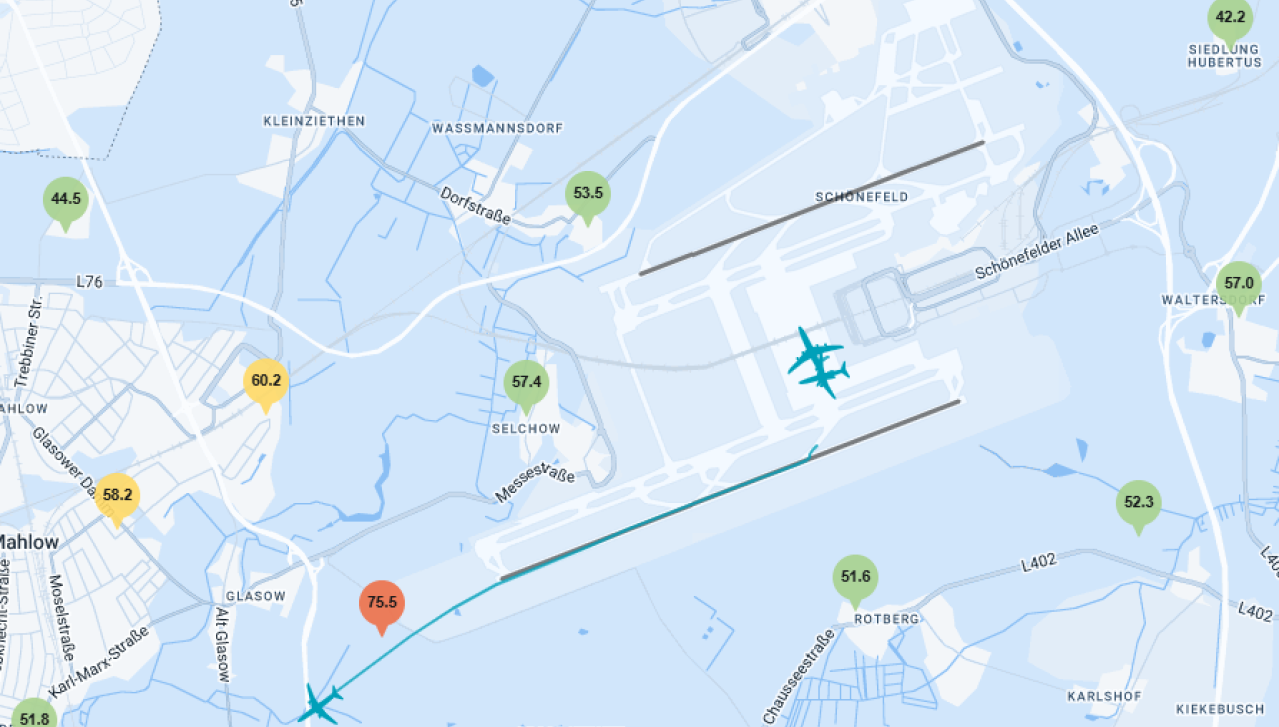
32 permanently installed measuring points
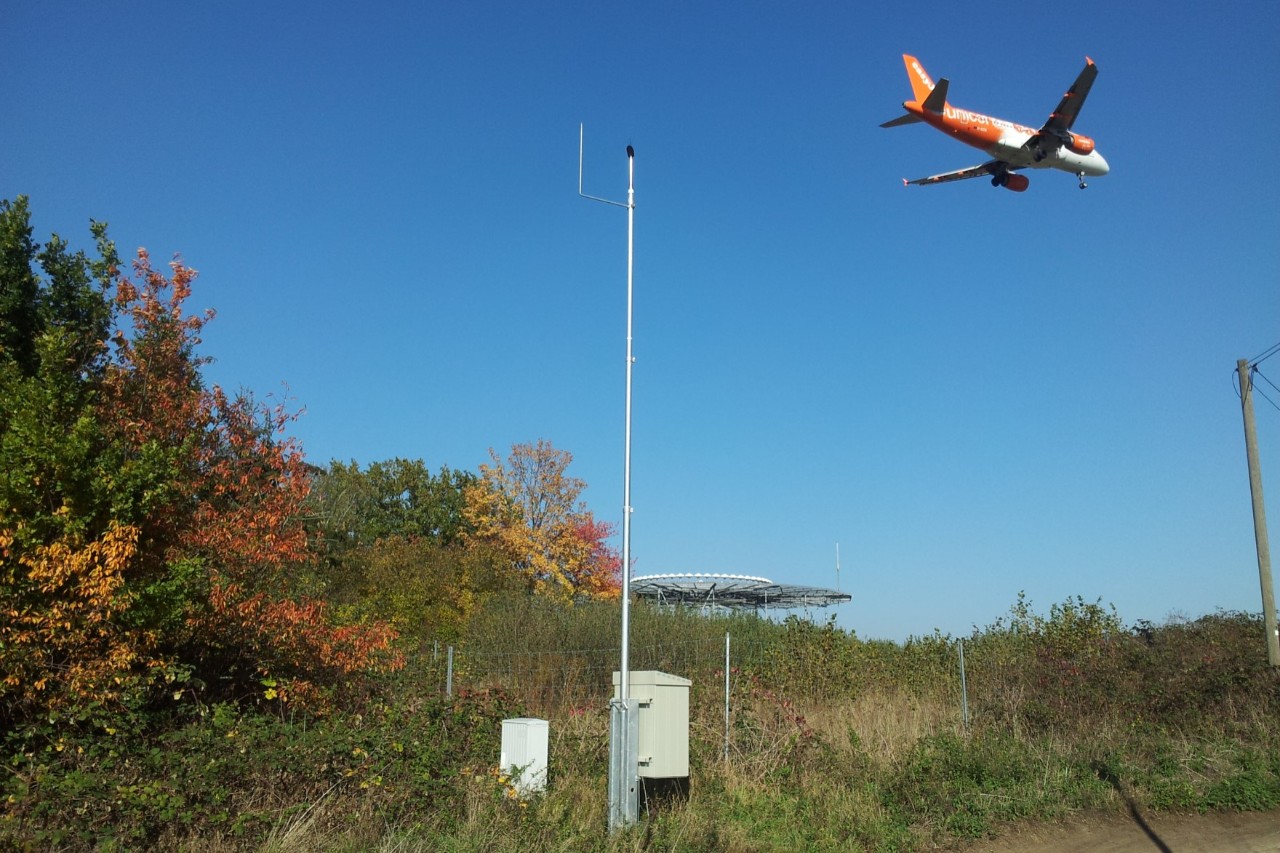
FBB utilises a dense network of measuring points that are set up around BER and are primarily geared towards the various flight routes. The measuring points contain calibrated special microphones that measure noise on a mast at a height of at least 6 metres. The measurement data are permanently sent to FBB and can be called up on the internet around the clock with a few seconds delay via TraVis. Analyses of the measurement data are also published in monthly aircraft noise reports on the internet. Prior to this, all recorded noise events are viewed by FBB’s emission control team, listened to in the event of doubt and sorted out where applicable. This is necessary because the measuring points cannot automatically distinguish between aircraft noise and the barking of dogs, twittering of birds or car horns.
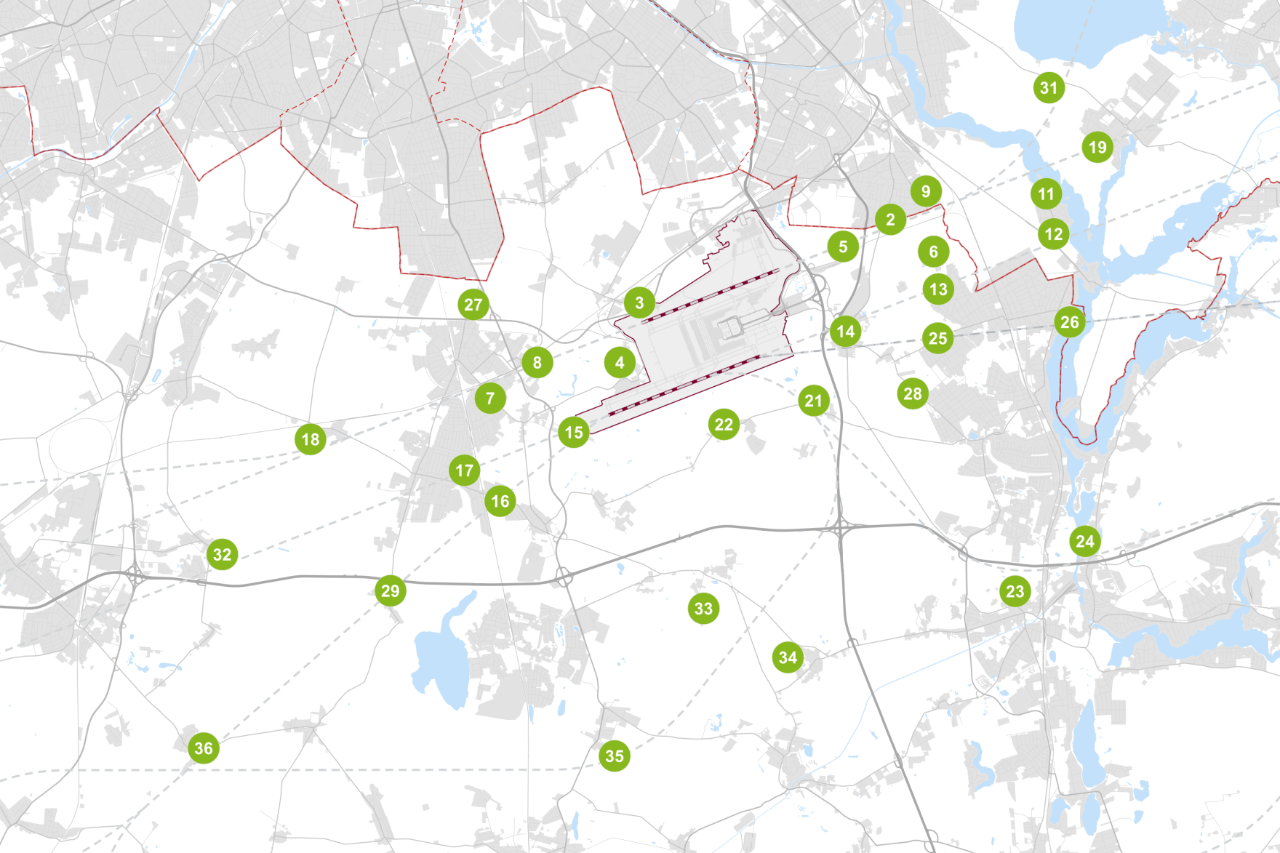
In 2021 the locations were supplemented so that there are now at least three aircraft noise measuring points along each individual flight route. Measuring point 36 was added at the end of 2022, and measuring point 28 in August 2025.
Aircraft noise reports:
Stationary measurements
All monthly measurement results from the stationary measuring points are documented and can be consulted here:
Monthly aircraft noise measurement reports (in German)
The annual aircraft noise reports can be found here:
Mobile measuring stations
change location every month
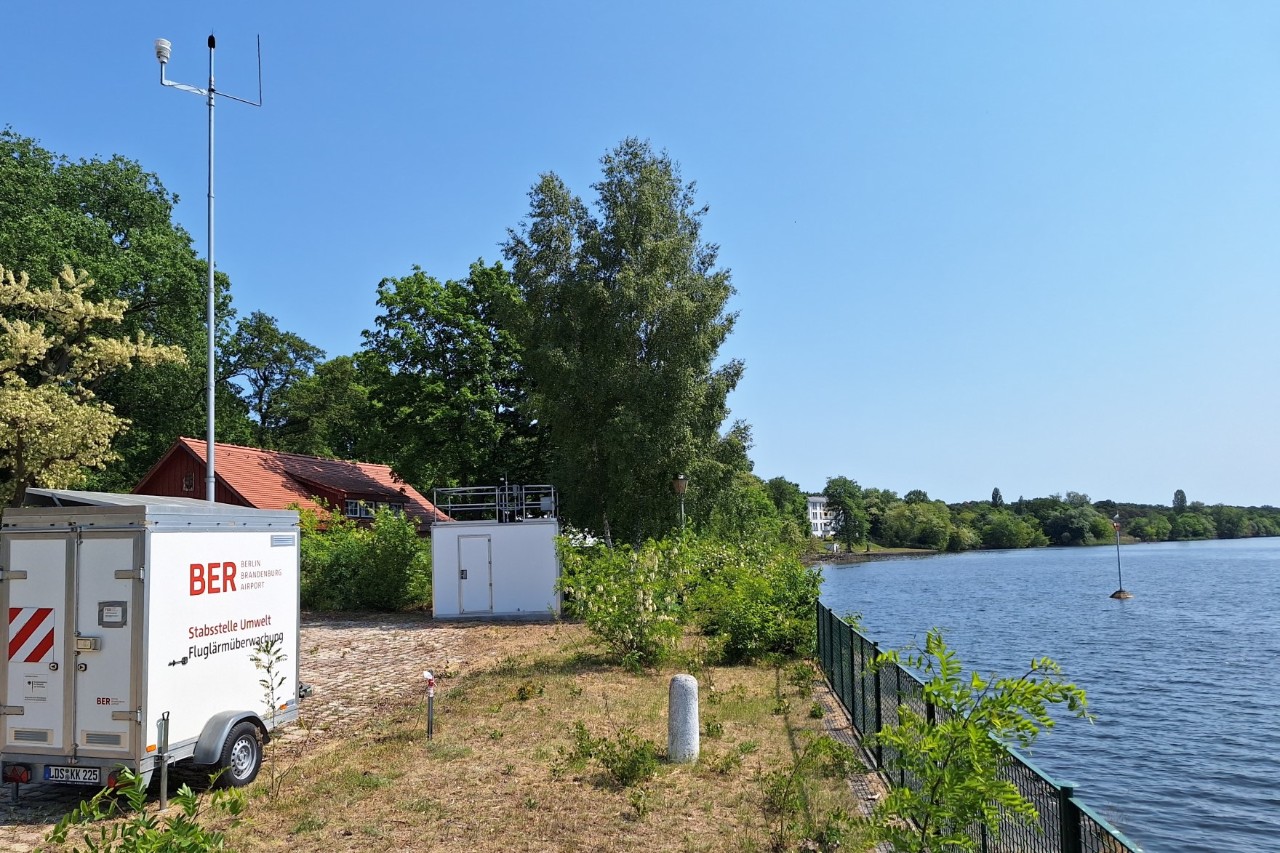
Two mobile measuring stations powered by solar energy and fuel cells are used at locations without a fixed measuring point. Repeated measurements at the same locations allow changes in aircraft noise levels to be documented. Repetitions of measurements with the mobile stations are also used to document changes when flight routes are altered.
Measurement reports:
Mobile measurements
All measurement results from the mobile measuring points can be consulted here:
How to reach us:
-
 Airport information (24/7)
 -
 Find the right contact


