Quieter flying should be
worth its while
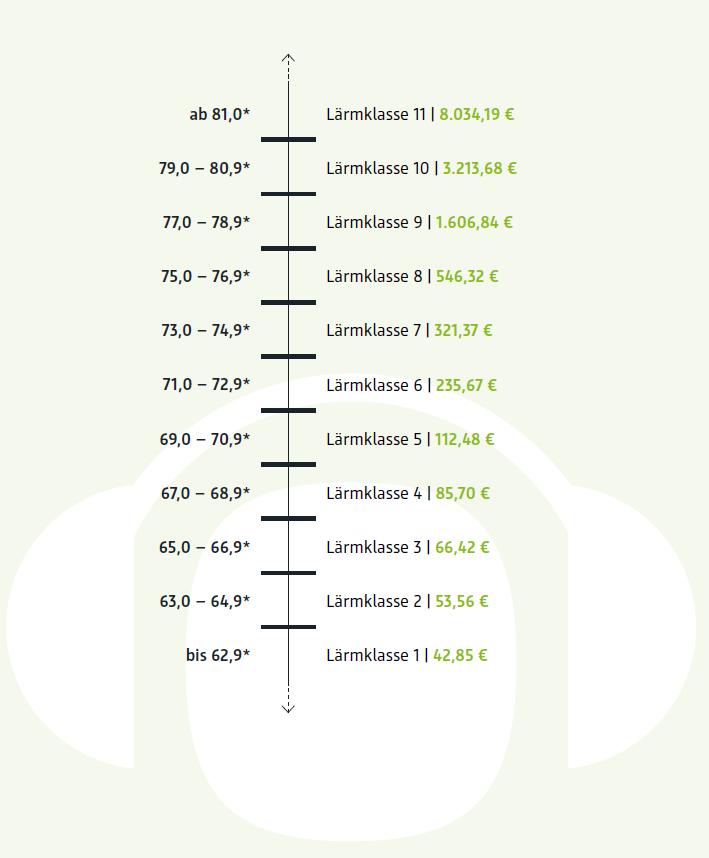
Whether innovative charges, more economical and quieter aircraft or the switch to low-noise steep take-off procedures: FBB is using various methods, including financial incentives, to ensure that aircraft at BER are quieter and that neighbours are relieved of noise. After years of development work and its introduction in September 2022, FBB’s new charging model is now being used across the board at BER and airlines have since been financially rewarded for quieter flying. To FBB’s knowledge, BER is the first airport in the world at which noise charges are no longer calculated on a flat-rate basis according to the type of aircraft used, but based on the noise actually caused. This is aided by a dense network of aircraft noise measuring points by way of which the noise of each individual flight is measured from three measuring points located along the respective flight route. The average value calculated from this measurement determines the level of the noise charge. Differences in cost can vary considerably, ranging from around 40 euros to more than 7,700 euros for each flight.
Level limits of the noise classes
Ascertainable effects
Effects are identifiable because several airlines have switched to the Noise Abatement Departure Procedure 1 (NADP1) for their take-offs at BER. This is a so-called steep take-off procedure in which the aircraft quickly gain altitude and, therefore, cause less noise on the ground in the airport vicinity. The differences between NADP1 and NADP2, the flat take-off procedure, are perceptible close to the airport on the ground. Comparative measurements of a typical Airbus A320 for BER show differences of up to 2 decibels.
Aircraft in use are getting
quieter and quieter
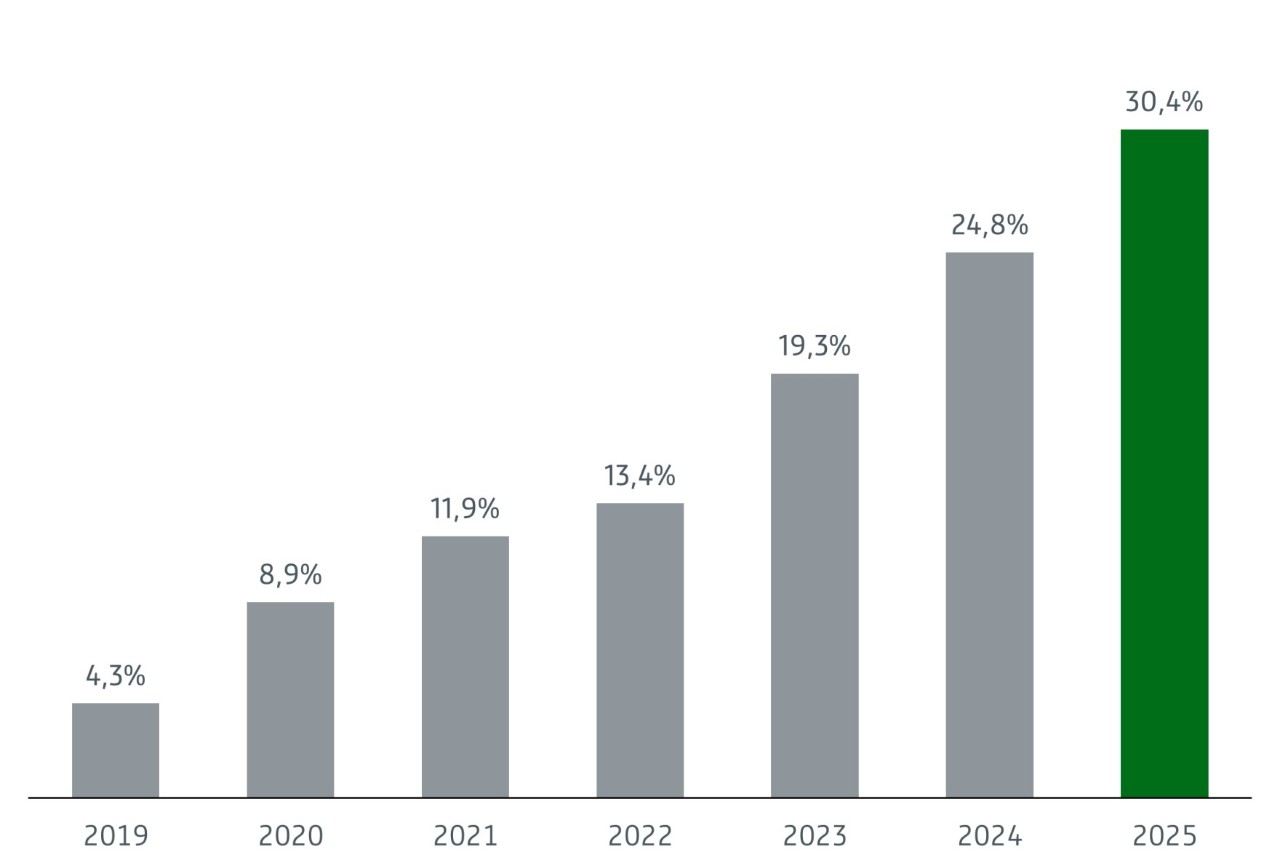
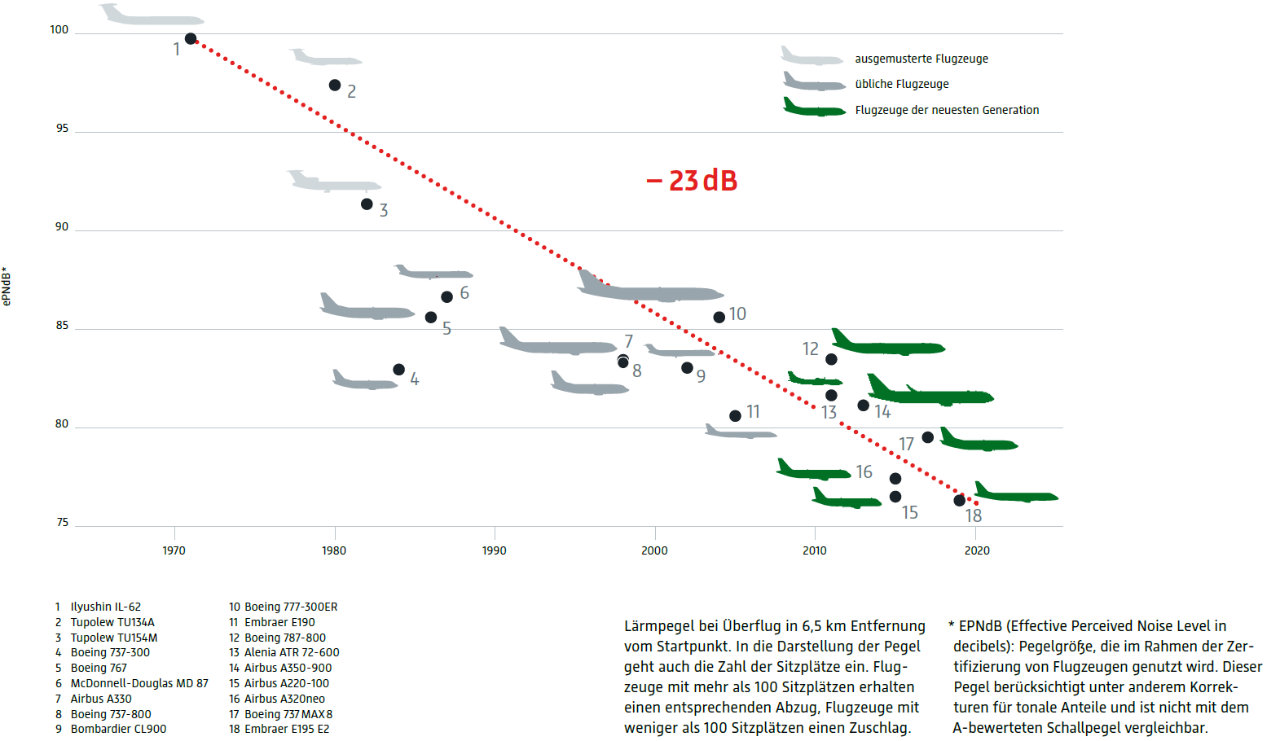
Furthermore, more and more airlines are flying to BER with the latest generation of aircraft. These are not only more efficient, but also quieter than older models. The share of the latest generation of aircraft, including the Airbus A320neo, the Airbus A350, the Boeing 787 and the Embraer E195 E2, has increased to over 30 percent in recent years.
A look at the past decades makes the development of aircraft even clearer. The latest generation of aircraft are now only half as loud as those built before the turn of the millennium. This possible thanks to technological advances in aircraft design and engine technology geared towards reducing noise. Modern aircraft designs use materials and construction methods that help minimise vibrations and airflow noise. Furthermore, the more efficient and quieter engines of modern aircraft, in particular, contribute to noise reduction.
How to reach us:
-
 Airport information (24/7)
 -
 Find the right contact


