Analyses of natural products supplement measurements
In addition to measuring the usual air pollutants and ultra-fine particulate matter, the airport company (FBB) relies on monitoring bees and plants. This involves checking whether and to what extent pollutants that are typical in air traffic are accumulated in honey, pollen and wax or in standardised kale plants and grass cultures. With these environmental monitoring programmes, FBB’s activities extend beyond the official requirements for air quality monitoring.
Bee monitoring
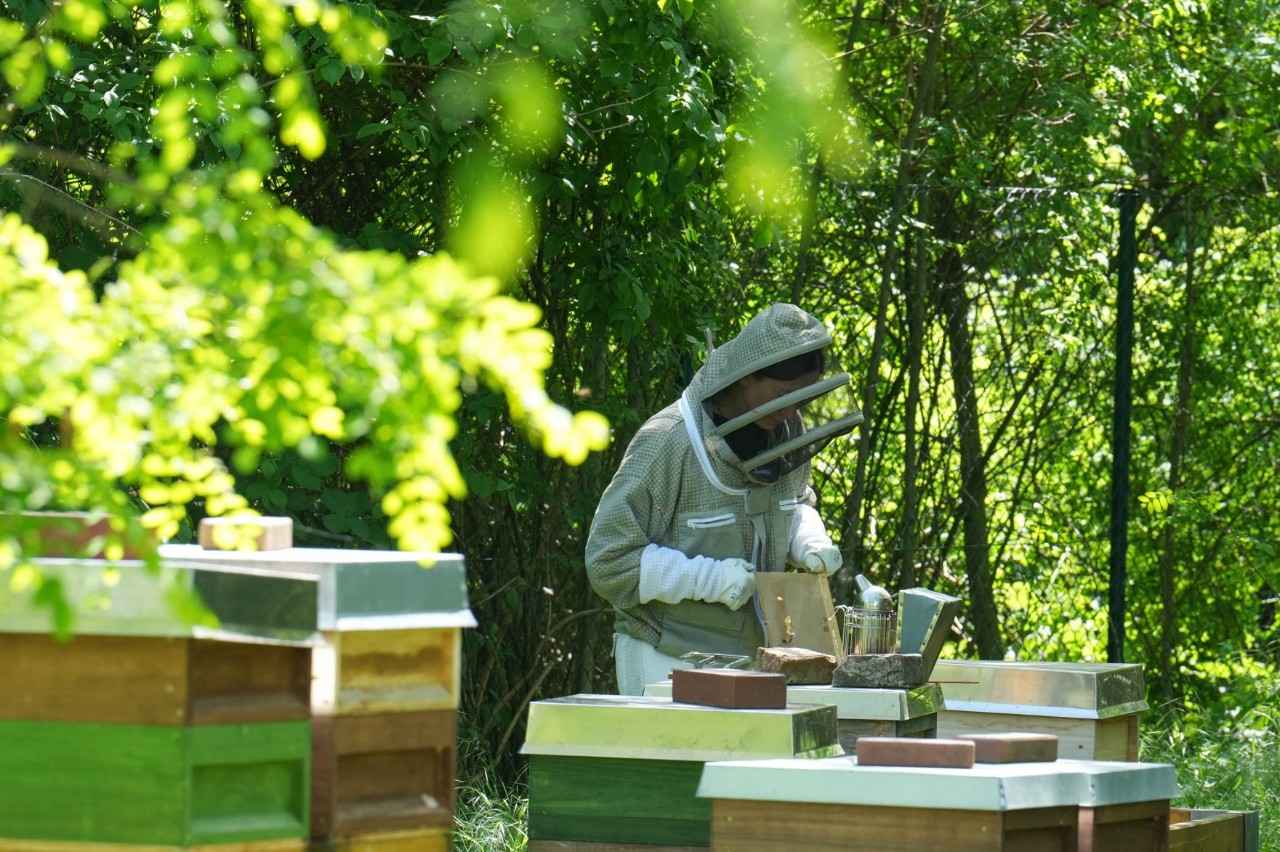
There are numerous beehives at two locations at BER specifically for bee monitoring, which are inhabited by many different bee colonies. The several thousand bees collect a lot of honey - about 100 kilograms every year - which, with samples of pollen and wax, is analysed by an environmental laboratory for pollutants that typically occur in air traffic. The analyses always show the same results: That airport operations have no influence on the quality of the honey or on the wax and pollen.
The analyses focus on the content of heavy metals (antimony, arsenic, lead, cadmium, chromium, copper, nickel, mercury and zinc) and polycyclic aromatic hydrocarbons (PAHs), all of which are considered typical indicators of air traffic. The samples are compared with a reference site in the Schorfheide biosphere, where no pollutants that typically occur in air traffic are to be expected. Bee monitoring was also conducted in 2011 to 2019, when samples were taken at Schönefeld and Tegel airports and compared with samples from the Schorfheide. Even then, it was clear that air traffic had no effect on the quality of the honey and that the levels of the substances analysed in honey, pollen and wax were harmlessly low.
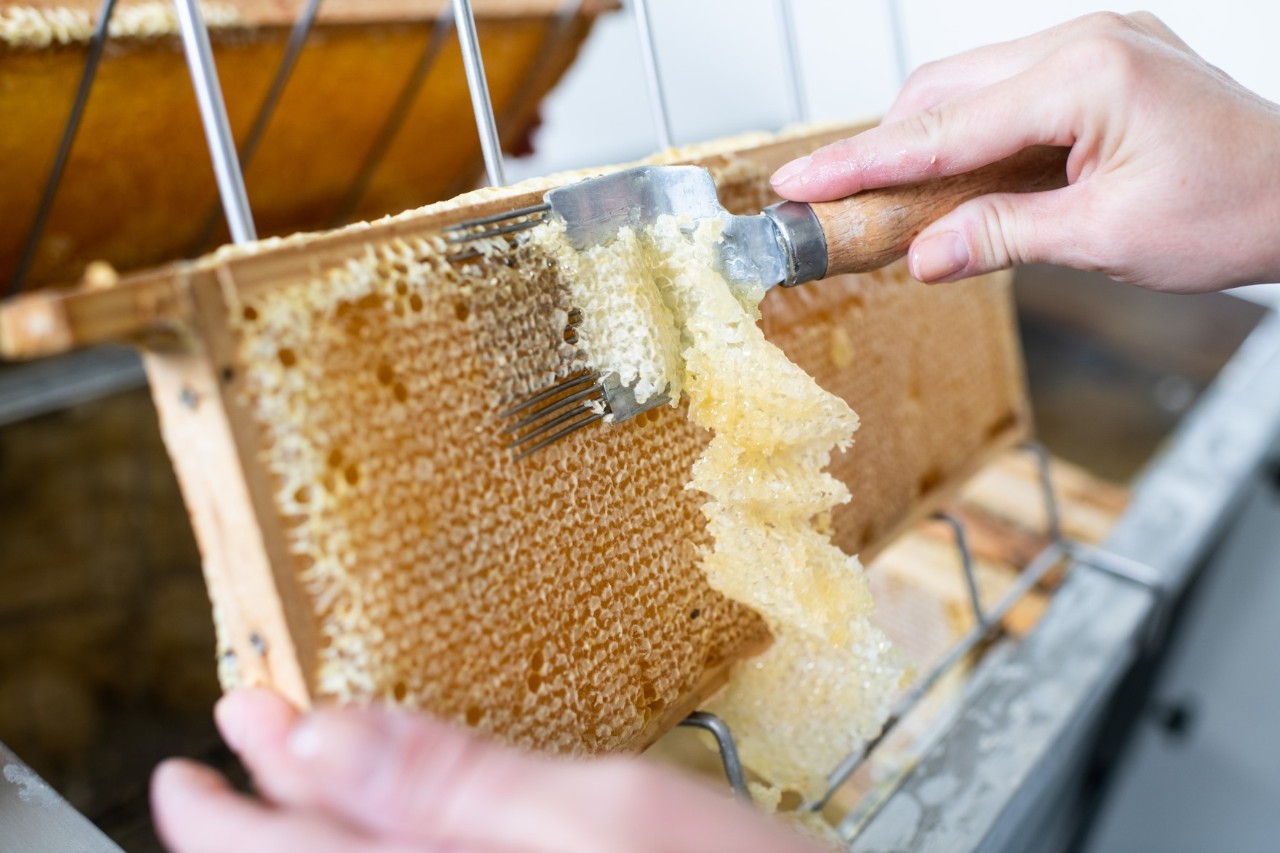
Bees are well suited for such a series of tests because they are particularly sensitive to pollutants and disturbances to their living conditions. During their daily excursions, a forager bee flies to about 4,000 flowers and comes into contact with potentially harmful substances found on the flowers and pollen as well as in the environment. The samples are provided by several bee colonies that collect their nectar on the airport site or in the immediate vicinity of BER. Honey, pollen and honeycombs are analysed by the Munich-based environmental institute UMW Umweltmonitoring.
Annual bee monitoring reports (in German) can be found here.
Bio-monitoring
In addition to the continual air quality measurements and bee monitoring, FBB also conducts bio-monitoring at BER to monitor the air quality. This included extensive measurements in 2022 with kale plants and grasses, which were planted in special pots not far from BER and are very suitable for bio-monitoring as representatives of fodder plants.
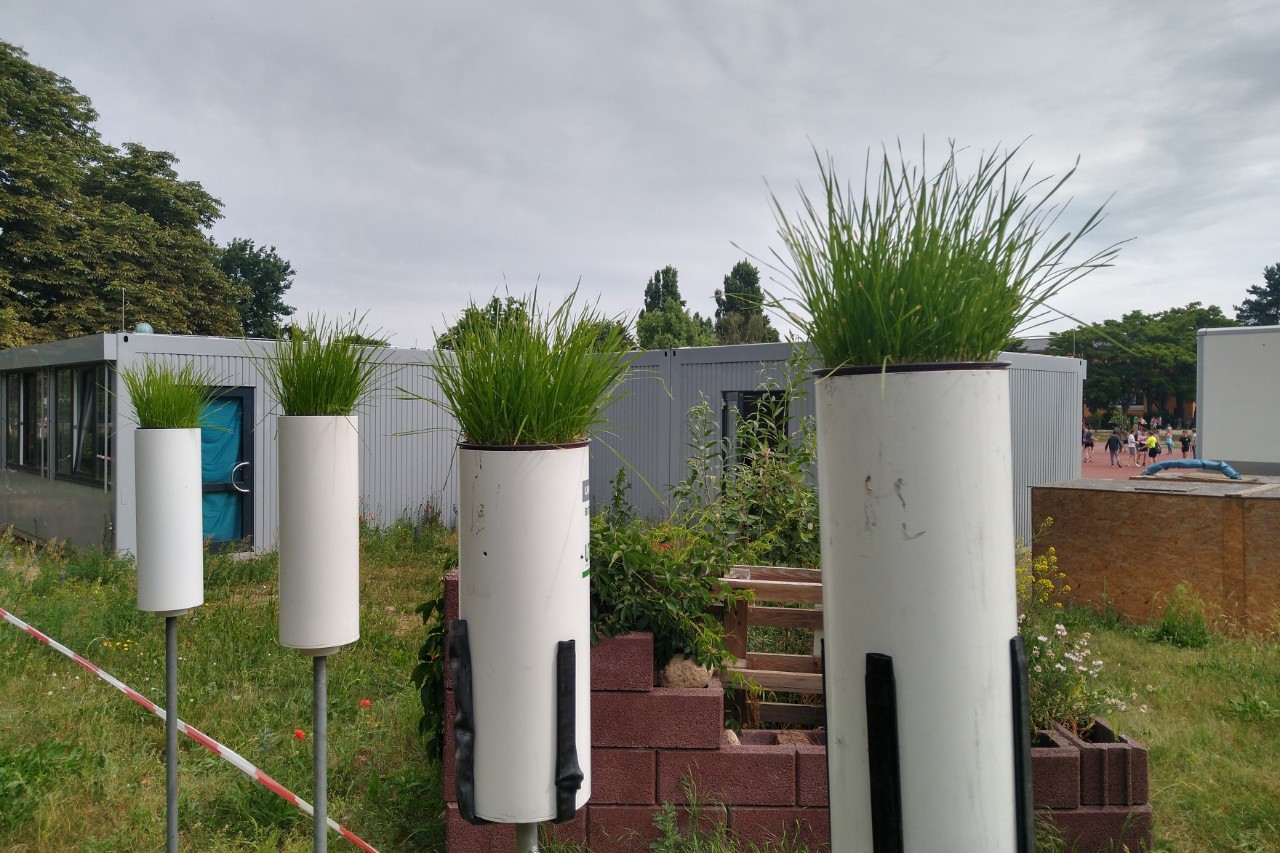
The results show no increased pollutant inputs from air pollutants. The levels of the analysed substances in the plants are harmlessly low. Earlier measurements carried out in Schönefeld and Tegel from 2011 to 2015 also came to the same conclusion.
The test results will be continued and published every three years to document potential changes in air quality.
Bio-monitoring reports (in German) can be found here.
How to reach us:
-
 Airport information (24/7)
 -
 Find the right contact


